

In the field of power transmission and distribution, transformers are core equipment that undertakes the task of voltage conversion and power transmission. Anyone who has come into contact with transformers will find a common phenomenon: the rated value of transformers is always marked in kVA (kilovolt-ampere) instead of kW (kilowatt). This is not a random choice, but a scientific setting based on the working principle of transformers and actual application needs. Especially for equipment such as 150 kva dry type transformer and dry type distribution transformer, their rated values also follow this principle, which is crucial for ensuring safe and efficient operation in industrial and commercial scenarios.
First of all, we need to clarify the core function of transformers: they only transmit power from one circuit to another without changing the power and frequency. In other words, transformers can only increase or decrease the values of current and voltage under the condition that power and frequency remain unchanged. The nameplate of a transformer is usually printed with basic data such as VA rating, single-phase/three-phase type (power or distribution transformer), step-up/step-down type, and connection mode, so as to help users understand the equipment performance. Among them, the VA or kVA rating is the most critical parameter, which is closely related to the loss of the transformer.
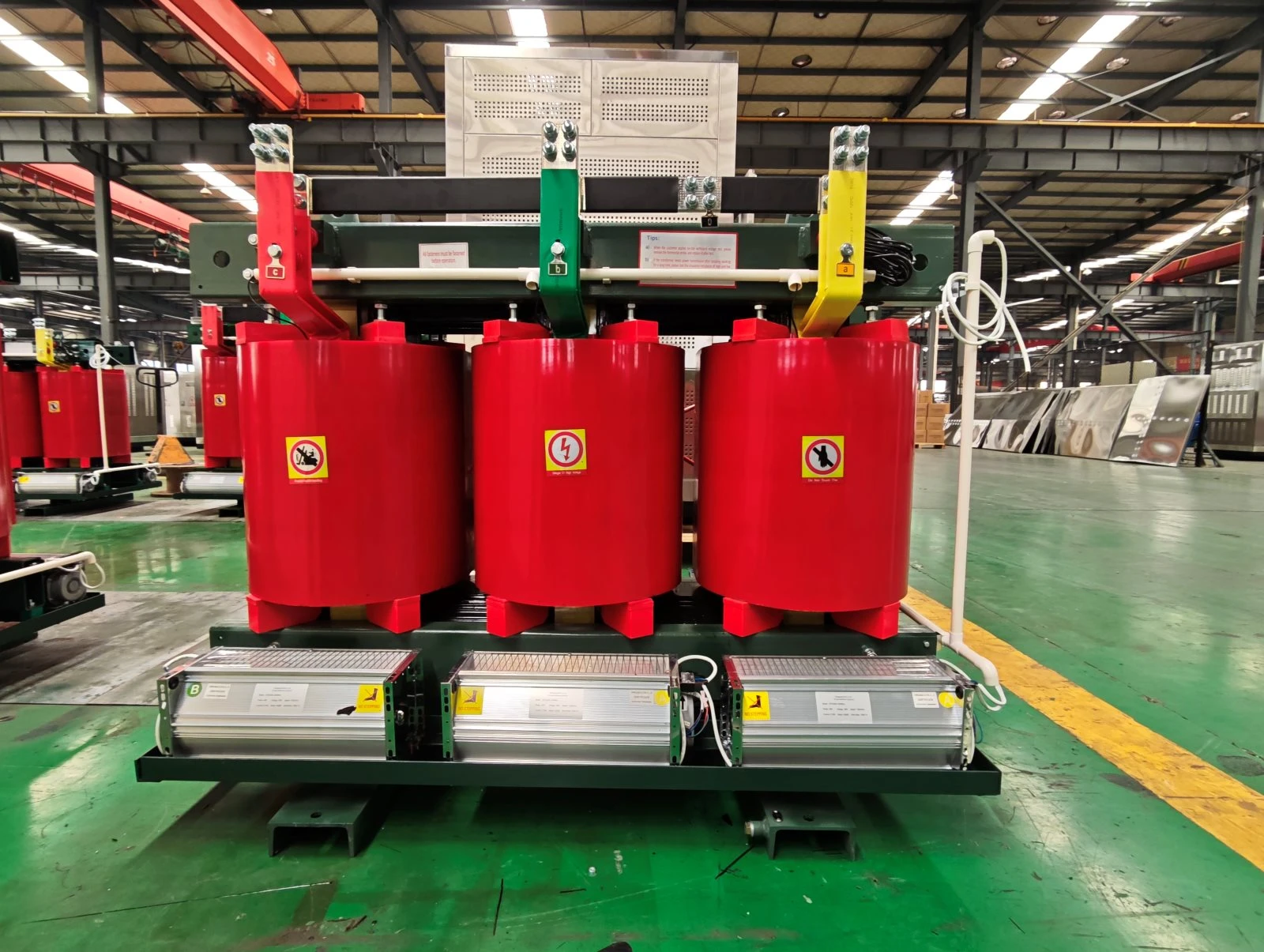
Transformers have two main types of losses in operation, which directly determine their rated value marking method:
1. Copper Loss: It is calculated by the formula I²R, which depends on the current passing through the transformer windings. The greater the current, the higher the copper loss. For dry type distribution transformer, which is widely used in indoor power distribution scenarios, the rational control of copper loss is crucial to ensure long-term stable operation.
2. Iron Loss (also known as core loss or insulation loss): It is caused by eddy current and hysteresis effect in the iron core, which depends on the voltage applied to the transformer. As long as the transformer is energized, the iron loss will exist stably and is basically not affected by the load. The 150 kva dry type transformer, which is favored in small and medium-sized industrial plants, also has such loss characteristics, and its iron loss is fixed under rated voltage.
The key point is that the total loss of the transformer depends on the voltage (V) and current (I), which is expressed in volt-ampere (VA), and has nothing to do with the load power factor (PF). This is the fundamental reason why transformer ratings are expressed in VA or kVA instead of W or kW. When manufacturers design transformers such as 150 kva dry type transformer and dry type distribution transformer, they cannot predict the specific load types that the transformers will be connected to in the future.
The load connected to the secondary side of the transformer may be resistive (such as electric heaters), inductive (such as motors), capacitive (such as capacitors) or mixed loads. Different load types will lead to different power factor values. For example, the power factor of pure resistive load is 1, while the power factor of inductive or capacitive load is usually less than 1. If the transformer is rated in kW, it will be limited by the power factor, resulting in inaccurate capacity marking and even potential safety hazards.
Let us use a practical example to further illustrate this principle. Suppose we have a single-phase step-up transformer, which is similar to the working principle of 150 kva dry type transformer in terms of loss characteristics:
Transformer rated value in kVA = 11kVA Primary voltage = 110V Primary current = 100A Secondary voltage = 220V Secondary current = 50A Secondary equivalent resistance = 5Ω Iron loss = 30W
Case 1: Connect a resistive load to the secondary side, with a power factor Φ = 1. At this time, the total loss of the transformer is copper loss + iron loss, that is, I²R + iron loss. Substituting the values: (50² × 5) + 30W = 12530W = 12.53kW. The output power of the transformer is P = V × I × Cosϕ = 220 × 50 × 1 = 11kW. The transformer rating is (220 × 50) ÷ 1000 = 11kVA.
Case 2: Connect an inductive or capacitive load to the secondary side, with a power factor Φ = 0.6. At this time, the total loss of the transformer is still copper loss + iron loss, which is still 12.53kW. However, the output power of the transformer becomes P = 220 × 50 × 0.6 = 6.6kW. The transformer rating is still (220 × 50) ÷ 1000 = 11kVA.
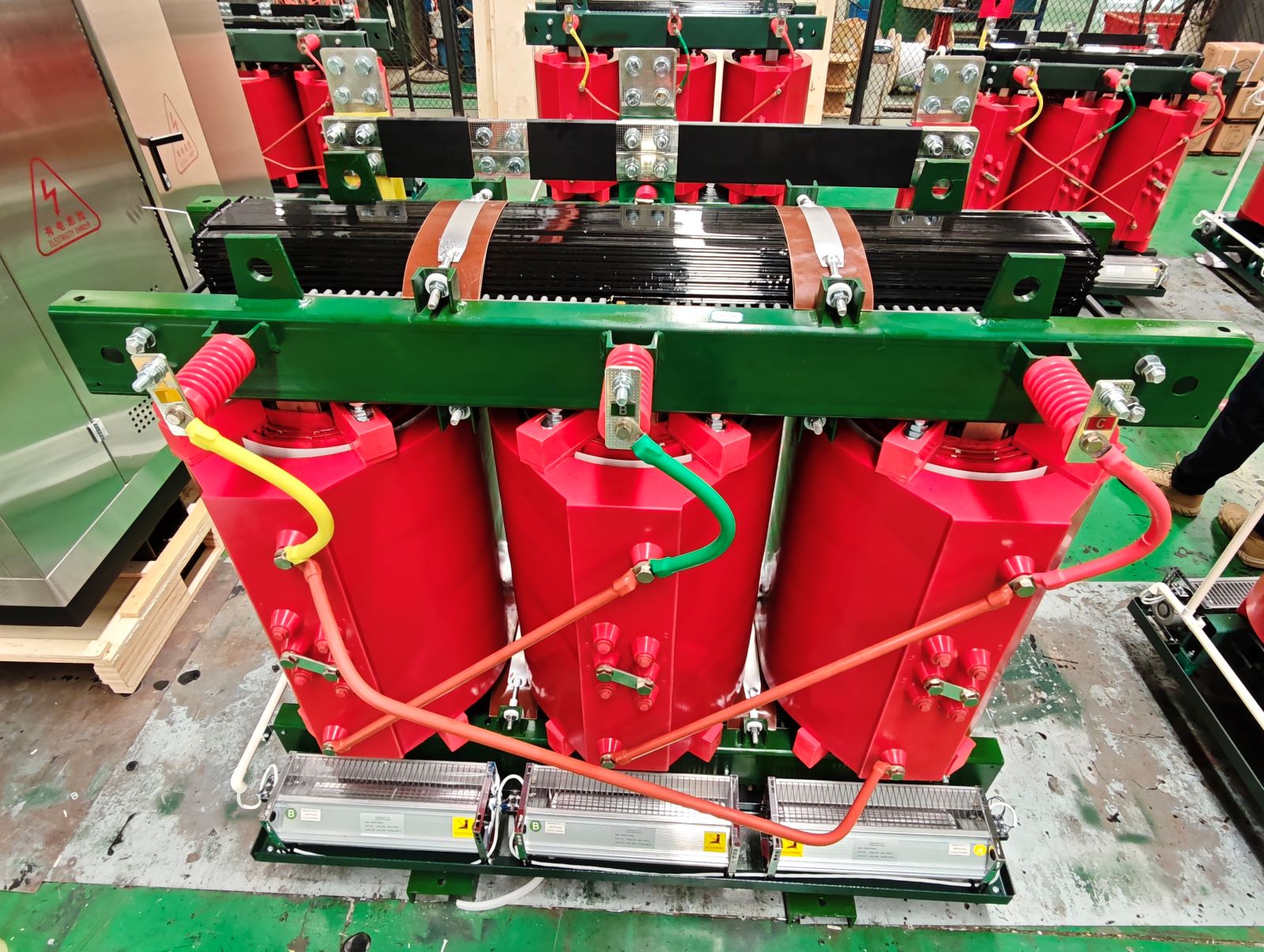
It can be seen from the example that the rated value of the transformer (11kVA) remains unchanged, but the actual output power varies with the power factor. This is because the loss of the transformer is only related to voltage and current, not to the power factor. For dry type distribution transformer used in power distribution systems, this characteristic ensures that it can adapt to different load environments and maintain stable performance.
JINSHANMEN TECHNOLOGY CO., LTD is a professional manufacturer of power transmission and distribution equipment, which has rich experience in the production and R&D of transformers. The company mainly produces oil immersed power transformers, dry-type power transformers, oil immersed three-dimensional coiled power transformers, dry-type three-dimensional coiled power transformers, mining explosion-proof dry-type transformers, mining explosion-proof mobile substations, amorphous alloy power transformers, on load capacity regulating power transformers, locomotive dry-type transformers, as well as prefabricated substations, modular substations, wind energy box type substations, high and low voltage switchgear and other transmission and distribution equipment. Whether it is 150 kva dry type transformer or dry type distribution transformer, the company adheres to strict quality standards, ensures that the product rated value is accurate and reliable, and meets the diverse needs of industrial, commercial and mining fields.
In conclusion, the rated value of transformers is marked in kVA instead of kW, which is determined by the loss characteristics of transformers and the uncertainty of load types. This marking method can accurately reflect the maximum capacity that the transformer can bear, ensure the safe and stable operation of the equipment, and also provide a scientific basis for users to select and use transformers. For equipment such as 150 kva dry type transformer and dry type distribution transformer, understanding this principle is of great significance for rational selection, installation and maintenance.