

Oil Transformer
Why choose us
Our Products
We mainly produce a variety of transformers, including oil-immersed power transformers, dry-type power transformers, oil-immersed three-dimensional coiled transformers, and dry-type three-dimensional coiled transformers. Additionally, we offer mining explosion-proof dry-type transformers, as well as high and low voltage switchgear and other equipment for power transmission and distribution.
Our Company
Jinshan Gate Technology Co., LTD. (referred to as Jinshan Gate) is located at No. 795 Nanming Road, Shuige Industrial Park, Liandu District, Lishui City. Our factory covers 208 acres and employs over 500 people. We hold more than 20 patents and combine advanced domestic and international technologies to become a key player in the transformer industry.
Product Application
Our products are widely used in power and railway sectors. With complete testing equipment and strict quality checks, we ensure that our products are stable and reliable over time. This has made our products highly valued by the power sector and various users. We export to many regions, including Southeast Asia, the Middle East, and Africa.
Our Certificates
Our products have received ISO9001:2008 international quality system certification and have been approved by the National Electrical Product Quality Supervision and Inspection Center. They meet IEC and national standards and have obtained various relevant certifications, including production licenses and national safety marks.
What Is an Oil Transformer?
Transformers change an alternating current (AC) to a higher or lower voltage. A current may need to move to a higher voltage as higher voltages are easier and faster to transport. A current may need to decrease its voltage in residential, commercial, and industrial areas.


Benefits of Oil Transformer
Good insulation properties
Oil is an excellent insulating material that can effectively isolate windings and provide good electrical insulation properties.
High power density
Oil-immersed transformers can transmit larger power relative to their volume and have higher power density.
Good cooling performance
Oil can effectively cool the transformer and help maintain normal operating temperature of the equipment.
Low noise
Due to the better insulating properties of insulating oil, oil-immersed transformers usually produce relatively low noise.
Smaller volume
Under the same power, oil-immersed transformers usually have relatively smaller volumes.
What Are the Steps to Keep an Oil-Filled Transformer Running Smoothly?
You can take these precautionary steps to keep your oil-filled transformer running smoothly:
Step 1: To isolate the low-voltage side of the oil-filled transformer, hang a matching nameplate from the draw handle and flip the switch.
Step 2: Ensure the load switch is not connected to the voltage side of the oil-filled transformer, and that the grounding is generally disengaged before turning on the power.
Step 3: Remove the high-voltage knife and inspect the shell, porcelain, and lead wire with an electroscope.
Step 4: The porcelain, heat loss, and cleaning systems of the oil-filled transformer need to be thoroughly checked and maintained regularly.
Step 5: When maintaining an oil-filled transformer, it is essential to inspect the voltage side load switch for proper operation and lubricate the transmission parts.
How to Perform Routine Maintenance on Oil-Filled Transformers
Different strategies should be adopted for the routine maintenance of oil-filled transformers based on the frequency of maintenance work. Check out the following sections for valuable guidance on establishing maintenance schedules for daily, weekly, monthly, and yearly tasks.

Daily Procedures
These are the maintenance procedures that must be implemented daily to keep an oil-filled transformer in working condition. The daily routine maintenance schedule includes inspecting the transformer’s temperature, electrical performance, and noise level, as described below:
●Oil and Temperature: To perform daily checks on the transformer’s temperature, inspect the ambient, oil, and winding temperatures and compare them against rated values. The oil level gauge indicator should vary with temperature changes. If the oil level gauge is a magnetic model, the indicator should rotate in the presence of a test magnet. If the indicator does not respond in either case, it must be replaced.
●Electrical Performance: To evaluate the transformer’s electrical performance, daily checks should include inspecting the load voltage and current values and comparing them against rated figures. The load settings dictate which type of transformer can be used to supply power. Due to its importance, a transformer is often protected by differential, overcurrent, and ground-current relays that must be monitored and maintained daily. Using the wrong transformer or failing to maintain protective relays can lead to electrical damage or equipment failure.
●Noise Level: While noise is a more prominent performance indicator for dry-type transformers, the noise level emitted by an oil-filled transformer’s coils, core, and cooling system can also be used to evaluate its performance. If an oil-filled transformer emits loud noises during operation, it is important to promptly identify the source of the noise and measure it using the following three techniques:
1.Sound Power Level Method
2.Sound Intensity Method
3.Sound Pressure Level Method

Weekly and Monthly Procedures
Some maintenance procedures must be implemented weekly or monthly to maintain the working condition of an oil-filled transformer. The weekly routine maintenance schedule should include the following tasks:
●Check the oil level gauge against the oil temperature to analyze the oil level inside the transformer.
●Conduct a full visual inspection of the transformer’s exterior for signs of chipped paint and discoloration.
●Inspect the Buchholz relay for signs of gas collection.
●Ensure that the gaskets, radiators, and joints are tight, with no signs of oil leakage.
●Inspect the seals of all cover-mounted pressure-relief devices.
●Investigate the operation of all pressure-relief devices.
Some maintenance work should be performed monthly or quarterly unless needed sooner. Such routine maintenance schedules should include the following tasks:
●Check the dielectric strength of the transformer oil and top off the oil as required every few months.
●Inspect the transformer terminal bushings and cable box for damage and tightness every few months.
●Check the bushings for cracks every month and during yearly inspections.
●Inspect and clean the transformer accessories and auxiliary circuits every six months.
●Collect transformer oil samples and periodically test them for moisture, acidity, deterioration, discoloration, and other properties to determine whether the oil needs to be filtered or replaced.
●Perform Dissolved Gas Analysis (DGA) on the oil samples to identify the types of gases dissolved in the oil. This can be done on-site if the testing equipment is available or by sending the samples to a laboratory. The most common gases found in transformer oil samples include hydrogen, oxygen, methane, ethane, carbon monoxide, acetylene, and ethylene.

Yearly Procedures
A yearly maintenance schedule should include the measures already discussed in the daily, weekly, and monthly schedules, along with additional tasks for components requiring less frequent maintenance. These tasks may require the assistance of transformer repair and maintenance professionals. The yearly routine maintenance schedule should include the following tasks:
●Check the pressure-relief valve, cover-mounted pressure-relief device, Schrader valve, and surge relay once a year for damage and operational efficiency.
●Check the off-circuit selector and temperature indicators annually. Replace any components that are damaged or not functioning properly.
●Assess the condition of the transformer protective relays and measure their insulation resistances.
●Clean the marshaling boxes and ensure that their weatherproof seals are undamaged.
●Check the condition of the fan and oil-pumping motors and their resistances.
●Examine the top of the transformer near the pressure-relief tank for leaks every three to five years.

Oil-Filled Transformer Maintenance Checklist
Preparing a maintenance checklist before performing maintenance on the oil-filled transformer can make the process much easier and ensure that all necessary steps and requirements are fulfilled. A checklist can assist both in-house and outsourced workers from trusted companies in performing their duties. The following steps are some basic items to check off the list during the maintenance process to ensure a thorough job:
●Ensure that the transformer is de-energized and offline before performing any maintenance work.
●Visually inspect the equipment for any rust, dirt accumulation, chipped paint, or discoloration.
●Listen to the unit when it is energized for any signs of abnormal vibrations or noise.
●Clean the transformer and remove all signs of dust, debris, and dirt.
●Check the transformer temperature and oil level indicators.
●Inspect all cables, bolts, and hardware for tightness. Tighten anything that may be loose.
●Re-energize the transformer before performing tests and analyses, such as breakdown voltage testing or infrared temperature analysis.
●Inspect the transformer for signs of leakage. If found, address the leak immediately. If a transformer leaks frequently, it may be better to fully replace the unit. Common sources of transformer oil leaks include bad gaskets, improperly welded points, and rust on the bottom of the unit.
●Record all events and conditions of the maintenance work. For example, note down the names of the workers, which parts of the transformer they worked on, and how and when they performed their maintenance duties.
The role of oil in an oil-filled transformer is what?
The role of oil in an oil-filled transformer encompasses several functions, including the following:
Insulation
Oil serves as an excellent insulating medium, isolating the electrical components inside the transformer, such as windings and insulators, to prevent circuit shorts and electrical faults. It effectively prevents current from flowing where it shouldn't, ensuring the safe transmission of electricity.
Cooling
Oil is also used for heat dissipation, helping to control the temperature of the transformer. Transformers generate heat during operation, and the oil absorbs this heat, subsequently transferring it to the surrounding environment through a radiator, thus maintaining the transformer's temperature within a manageable range.
Maintenance
Oil is employed to preserve various components inside the transformer, such as windings and the iron core. It prevents air and moisture from coming into contact with internal parts, reducing the risks of oxidation and corrosion, and extending the transformer's lifespan.
Damping
Oil can also, to some extent, dampen mechanical shocks and vibrations, contributing to the protection of the transformer's structure and internal components.
Cooling oil according to the principle of heat generated by the coil and magnetic core during operation will transfer to the oil. The temperature of the oil will spread out to the outside through the transformer's metal shell.
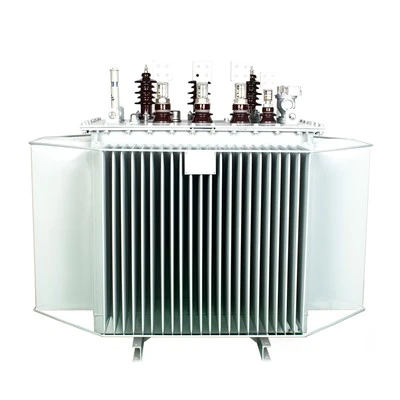
Oil-immersed transformers consist of the magnetic core, windings and bushings. The magnetic core provides a path for magnetic flow. Windings create a magnetic field and consist of a conductor coil, wrapped around the core and insulated with press board barriers and screens. The thickness of the winding insulation increases with voltage.
Bushings connect transformer windings to a substation. A characteristic feature of an oil-immersed transformer is the oil conservator. It simplifies operation by monitoring the oil level in a tank and providing space for thermal expansion of the oil.
Moreover, the minimum net distance between the outer profile of the fuel oil-immersed transformer and the wall and door of the transformer room also has strict distance requirements. The various civil structures, fire barriers and storage tanks of oil-immersed power transformer substations are designed because of the flammability and liquidity of oil. In addition, "when the transformer room is located in the building, the door shall be a Class A fire door." In this way, the construction investment designed to prevent fire in each substation is naturally much larger.
Pad Mounted Transformer
In general, Pad mounted transformers are equipment mainly used for the distribution of energy. Our pad mounted transformers are connected to underground utility distribution lines, to reduce the primary voltage to the secondary voltage to be supply to the final customer.
These type of transformers are normally installed outdoor, placed on a pedestal, inside a tank made by mild steel material or stainless steel material, with two doors and a door lock to guarantee their safety.
Distribution Transformer
Distribution transformers are important equipment in the distribution network and power supply and distribution systems of industrial and mining enterprises. One of the main advantages is the compact structure, small size, low noise, and this oil type transformer has an hermetically sealed type and conservator type.
This oil type transformer is applicable in a mine, petrol chemical and other power distribution systems.
Mineral oil is the most used for this type of oil transformers. Among other insulating liquids you can also find vegetable oil.
Power Transformer
This transformers are the main component in the electrical grid. The oil transformer has a huge capacity, so in that way will save a lot of electrical energy, minimize power loss and this make reduce the costs of the clients at the same time. Also in this case, the oil in the transformer helps to the durability and electrical properties of transformer equipment.
Small Substation Transformer
Small substation transformer is another kind of oil type transformer. As we mentioned before, the oil helps transformer to extend their life and avoid damages.
Functions of Oil Type High Voltage Transformer
Voltage conversion
The main function is to convert voltage levels, including step-up and step-down, to meet different power needs.
Power transmission
Ensure the efficient and safe transmission of electrical energy from power plants to end users within the transmission and distribution network.
Load management
Adjust the output voltage through automatic or manual tap switches to meet different load conditions, ensuring sufficient power under different demand conditions.
Protection function
Equipped with protection devices such as overvoltage protection, overcurrent protection and temperature protection to protect the transformer and the connected electrical system.
Our Factory
JINSHANMEN TECHNOLOGY CO., LTD(JSM for short) is located at 795 Nanming Road, Shuige Industrial Park, Liandu District, Lishui City. It is a domestic transformer industry production enterprise that integrates domestic and foreign high-tech. The company has advanced production equipment and strong technical strength. Its products have passed the ISO9001:2008 international quality system certification and the National Electrical Product Quality Supervision and Inspection Center, meeting IEC and national standards, as well as obtaining relevant certificates such as production licenses, national safety marks, and explosion-proof certificates.


FAQ
As one of the most professional oil transformer manufacturers and suppliers in China, we're featured by quality products and good price. Please rest assured to buy oil transformer for sale here from our factory. Contact us for customized service.
500 kva pad mounted transformer, 250 kva power transformer, 250 kva 3 phase transformer