

As the most fundamental and widely used power conversion device in modern power systems, two-winding transformers form the backbone of voltage stepping, electrical isolation, and impedance matching for power transmission and distribution. Unlike multi-winding designs that handle multiple voltage levels simultaneously, a standard two-winding transformer contains only one primary winding and one secondary winding, dedicated to single voltage conversion between two electrical systems. This simple, reliable, and cost-effective structure makes it the preferred solution for most industrial power distribution, commercial power supply, and grid connection scenarios. In low-noise, fire-proof, and indoor installation environments, the dry type step down transformer with two-winding structure is extensively deployed to convert medium voltage to low-voltage usable power.
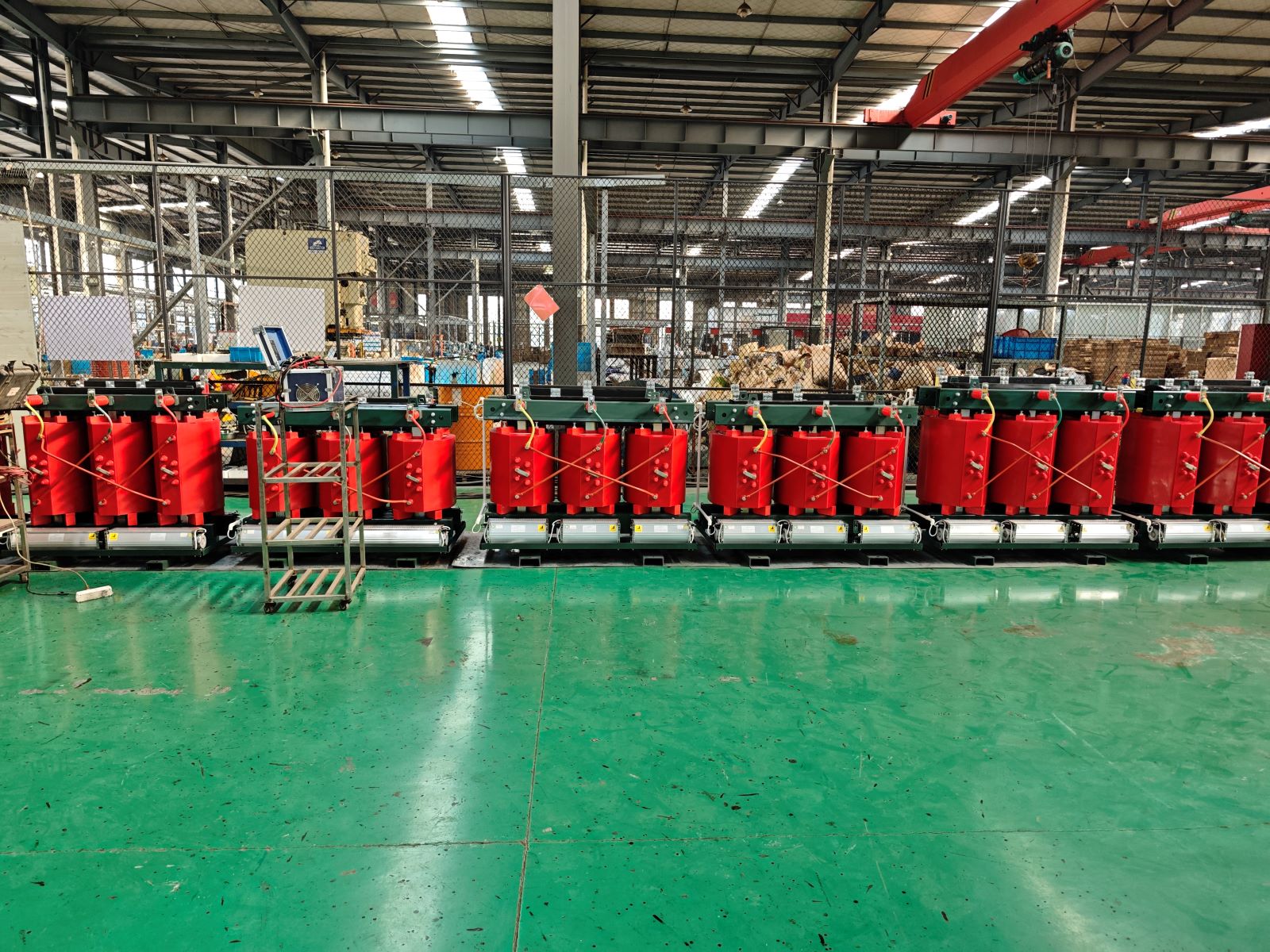
For large-scale industrial parks, factory central power distribution rooms, and regional grid branch stations, high-capacity power conversion equipment is essential to bear stable long-term load operation. The 2500 kva 3 phase transformer adopting classic two-winding layout is one of the mainstream high-power distribution devices, capable of undertaking full-load power supply for large manufacturing equipment and regional integrated power loads. Its standardized two-winding electromagnetic design ensures efficient energy conversion and low operational loss under continuous heavy-load conditions.
JINSHANMEN TECHNOLOGY CO., LTD is a professional manufacturer of full-series power transmission and distribution equipment. The company mainly produces oil immersed power transformers, dry-type power transformers, oil immersed three-dimensional coiled power transformers, dry-type three-dimensional coiled power transformers, mining explosion-proof dry-type transformers, mining explosion-proof mobile substations, amorphous alloy power transformers, on load capacity regulating power transformers, locomotive dry-type transformers, as well as prefabricated substations, modular substations, wind energy box type substations, high and low voltage switchgear and other transmission and distribution equipment. The company's customized dry type step down transformer and standardized 2500 kva 3 phase transformer strictly follow two-winding design principles, delivering stable, low-loss, and safe power conversion solutions for global industrial and commercial power distribution projects.
Ⅰ. Basic Definition and Core Features
A two-winding transformer refers to a transformer device with two electrically isolated winding sets wound on the same iron core: a primary winding connected to the input power source and a secondary winding connected to the load side. The two windings are completely insulated electrically and coupled through magnetic flux of the common iron core, realizing contactless electromagnetic energy transfer.
Different from three-winding transformers that output three voltage levels and autotransformers with electrical coupling between windings, two-winding transformers feature absolute electrical isolation, simple operating logic, and no cross-interference of multi-loop loads. It only achieves one-to-one voltage conversion, so it has higher operational stability and lower failure rate in single-voltage distribution systems.
Ⅱ. Structural Composition
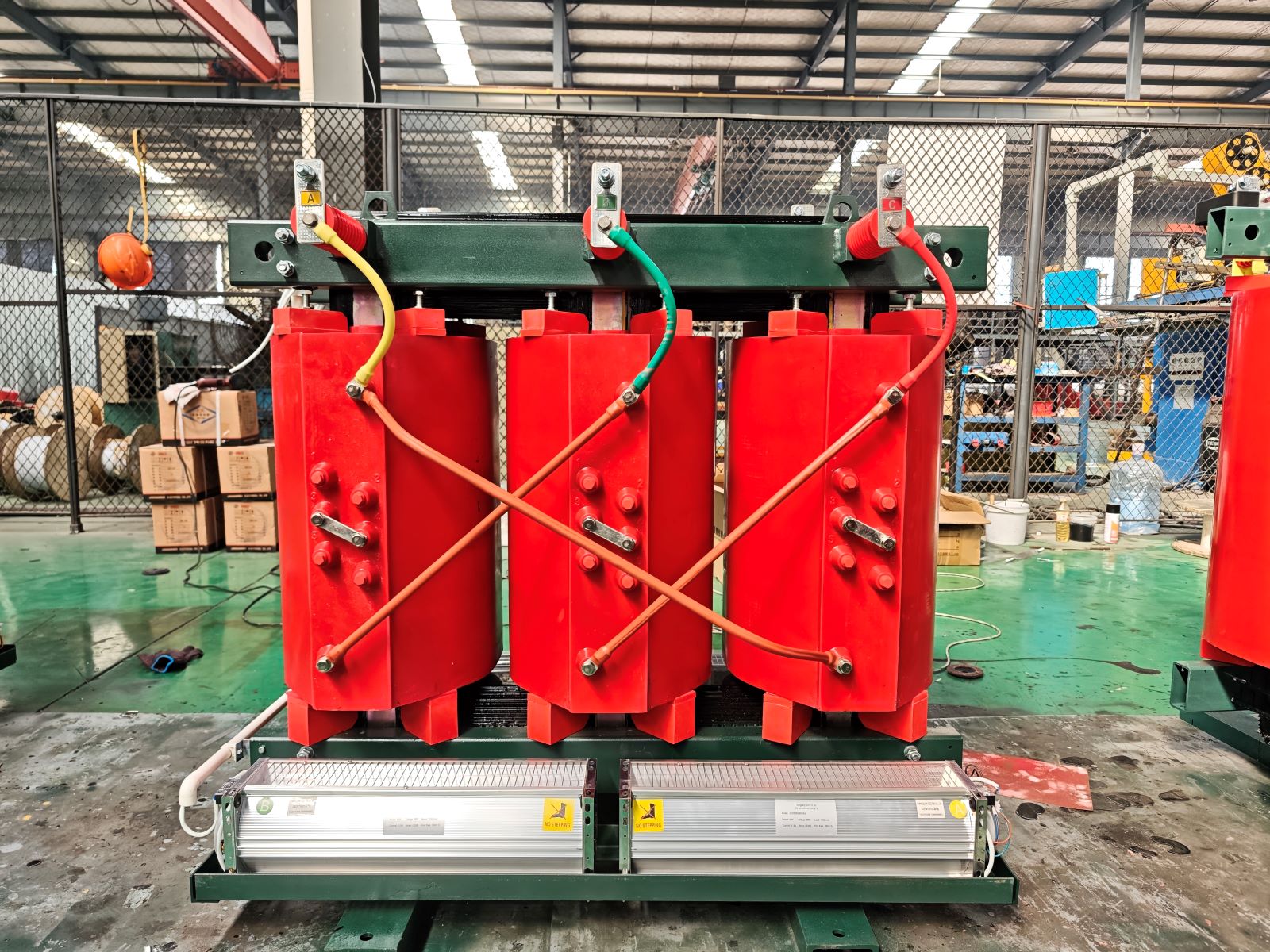
The core structure of a two-winding transformer consists of three key parts: laminated silicon steel iron core, primary and secondary insulated windings, and integral insulating and fixing components.
First, the iron core adopts high-permeability silicon steel lamination to concentrate magnetic flux, reduce magnetic leakage and no-load loss, and provide a closed magnetic circuit for electromagnetic induction. Second, two sets of independent windings are wound concentrically on the core column. To optimize insulation coordination and reduce inter-turn voltage stress, the high-voltage winding is arranged on the outer layer, while the low-voltage winding is closely attached to the core inner layer. Third, high-strength insulating paper, insulating brackets and clamping structures are used to fix windings, avoiding displacement and deformation during short-circuit impact and long-term vibration operation.
Ⅲ. Working Principle and Electromagnetic Logic
The working principle of two-winding transformers is based on Faraday's law of electromagnetic induction. When alternating current passes through the primary winding, alternating magnetic flux is generated in the closed iron core. The changing magnetic flux penetrates the secondary winding and induces alternating electromotive force, thereby outputting stable AC voltage on the load side.
The core voltage conversion rule depends strictly on the turns ratio of primary and secondary windings. The ratio of primary and secondary voltage is approximately equal to the ratio of their winding turns. When the secondary turns are fewer than the primary turns, the device acts as a step-down transformer; when secondary turns are more, it serves as a step-up transformer.
In rated load operation, ignoring tiny no-load current, the transformer follows ampere-turn balance principle: the magnetomotive force generated by the primary winding offsets the reverse magnetomotive force of the secondary winding, maintaining stable magnetic flux inside the core. This balanced electromagnetic state ensures continuous and efficient energy transmission.
Ⅳ. Core Advantages and Industrial Application Scenarios
Compared with multi-winding and autotransformer solutions, two-winding transformers have irreplaceable application value in industrial power distribution. Their prominent advantages include thorough electrical isolation, simple equivalent circuit, low maintenance cost, strong anti-interference capability, and excellent operational stability.
In urban commercial buildings, hospital power distribution, data center auxiliary power supply, and indoor industrial workshops where fire safety is prioritized, the dry type step down transformer with mature two-winding structure is the mainstream choice. It features flame retardant, explosion-proof, low noise and zero oil leakage, fully adapting to densely populated and closed indoor power supply environments.
For heavy-industry manufacturing, mining supporting power supply, and regional grid distribution stations that require large-capacity and long-term stable power supply, the high-power 2500 kva 3 phase transformer adopting two-winding design can effectively bear continuous heavy loads. Its standardized electromagnetic structure minimizes operating loss and voltage deviation, ensuring reliable power supply for production equipment.
Ⅴ. Differentiation with Other Transformer Types
Many engineering users confuse two-winding transformers with three-winding transformers and autotransformers. The essential difference lies in winding quantity and electrical connection mode. A three-winding transformer has three independent windings for three different voltage outputs, mostly used in hub substations with multi-voltage grid interconnection. An autotransformer has shared windings with electrical connection between primary and secondary sides, lacking complete isolation and only suitable for voltage regulation and specific grid matching scenarios.
Ⅵ. Conclusion
As the most classic and reliable power conversion device, the two-winding transformer supports the basic operation of the entire power distribution system with its simple structure, stable electromagnetic performance and thorough electrical isolation. Whether in low-capacity indoor power supply or high-capacity industrial grid connection scenarios, standardized two-winding design always maintains high efficiency and low failure rate. Dry type step down transformer and large-capacity 2500 kva 3 phase transformer are typical application representatives of two-winding technology in modern safe and high-power power distribution fields.
Adhering to refined manufacturing standards,JINSHANMEN TECHNOLOGY CO., LTD optimizes two-winding electromagnetic structures for different application scenarios, providing high-quality, low-loss, and high-stability transformer equipment for global power distribution projects.