

As a core equipment in the power system, the stable operation of transformers directly determines the safety and continuity of power supply. However, due to environmental factors, load fluctuations, inadequate maintenance and other reasons during long-term use, various faults are inevitable. JINSHANMEN TECHNOLOGY CO., LTD, a professional transformer manufacturer, mainly produces oil immersed power transformers, dry-type power transformers, oil immersed three-dimensional coiled power transformers, dry-type three-dimensional coiled power transformers, mining explosion-proof dry-type transformers, mining explosion-proof mobile substations, amorphous alloy power transformers, on load capacity regulating power transformers, locomotive dry-type transformers, as well as prefabricated substations, modular substations, wind energy box type substations, high and low voltage switchgear and other transmission and distribution equipment. Based on rich production and application experience, this article sorts out typical fault phenomena of transformers (including isolation power transformer and hermetically sealed oil filled transformer), helping you quickly identify problems, troubleshoot hidden dangers in time, and avoid accident expansion.
1. Appearance Faults
Appearance faults are the most easily detectable transformer faults, which can be initially judged without professional instruments. Special attention should be paid to the following situations, especially for hermetically sealed oil filled transformer with strict sealing requirements:
Oil leakage of oil-immersed transformers: Oil stains appear at the tank joints, oil pipe interfaces or valves, and severe leakage may form oil drops. For hermetically sealed oil filled transformer, even slight oil leakage will damage the sealing performance, leading to a drop in insulating oil level, affecting heat dissipation and insulation performance, and long-term leakage may cause equipment overheating.
Shell deformation or corrosion: The shell has dents, damages, or the surface coating falls off and rusts. It is mostly caused by external impact and erosion of harsh outdoor environments (rain, snow, salt spray). For isolation power transformer used in special occasions such as industrial sites, shell damage may also lead to internal component damage and safety risks.
Insulator damage or contamination: Insulators at high-voltage terminals have cracks, damages, or are covered with a large amount of dust and oil stains. This will reduce the insulation strength, and may cause flashover discharge and even short-circuit faults. This fault is more prominent in isolation power transformer working in dusty environments.
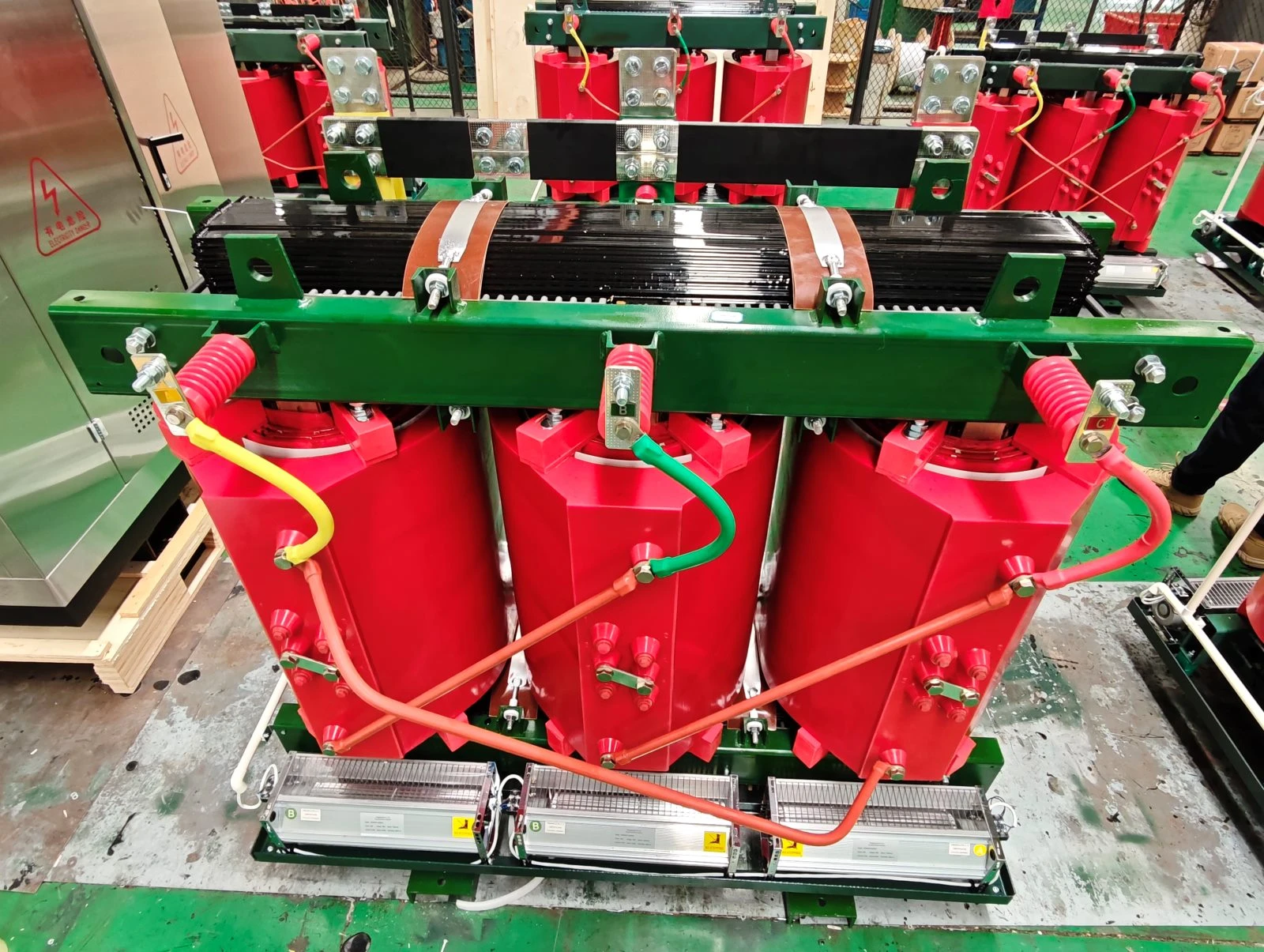
Dry-type transformer winding discoloration: The epoxy resin cast winding has yellowing or blackening marks, which is mostly caused by winding overheating due to overload or poor heat dissipation. In severe cases, it may be accompanied by insulation layer cracking.
2. Abnormal Operating Noise
A normally operating transformer emits a uniform and stable "buzzing" electromagnetic sound. Once abnormal sounds occur, it is a typical transformer fault phenomenon that requires vigilance. The sound change of isolation power transformer is more obvious due to its special insulation structure:
Increased abnormal noise: The "buzzing" sound becomes significantly louder and duller, which is mostly caused by overloaded operation, loose iron core or abnormal voltage. For hermetically sealed oil filled transformer, long-term increased noise may cause winding overheating and insulation aging.
Bursting/crackling sound: A sudden "crackling" discharge sound or "bursting" sound may be caused by winding insulation breakdown, iron core short circuit, or flashover discharge on the insulator surface. Regardless of whether it is an isolation power transformer or a hermetically sealed oil filled transformer, it is necessary to shut down for inspection immediately when this sound occurs.
Irregular noise: Accompanied by "sizzling" or "rustling" sounds, it may be caused by loose internal components, foreign objects entering the cabinet, or poor contact of terminal blocks. Long-term operation may easily cause local overheating.
3. Abnormal Parameters
Checking operating parameters with monitoring instruments is the key to accurately judging transformer fault phenomena. Focus on the following data fluctuations, which are also important basis for judging faults of hermetically sealed oil filled transformer and isolation power transformer:
Excessively high oil temperature: The oil temperature of oil-immersed transformers exceeds 85℃, and the winding temperature of dry-type transformers exceeds 110℃, and it continues to not drop. It is mostly caused by cooling system failure (radiator blockage, fan damage), overloaded operation or internal short circuit. The hermetically sealed oil filled transformer has high requirements on heat dissipation efficiency, and excessive oil temperature is more likely to cause chain faults.
Unstable voltage/current: The output voltage fluctuates by more than ±5%, or the current fluctuates greatly, and the three-phase current is unbalanced. It may be caused by poor contact of the tap changer, inter-turn short circuit of the winding, or fluctuation of the external power supply system. This fault will directly affect the power supply quality of the isolation power transformer.
Abnormal oil level: The oil level of the oil conservator of the oil-immersed transformer is lower than the minimum scale, or drops sharply suddenly. In addition to oil leakage, it may also be caused by the contraction of oil volume due to sudden temperature changes. For hermetically sealed oil filled transformer, abnormal oil level is usually a sign of internal faults and needs to be paid special attention to.
4. Core Component Faults
Core component faults are deep-seated transformer fault phenomena. If not handled in time, they may cause equipment shutdown or even scrapping. JINSHANMEN TECHNOLOGY reminds that core component detection should be strengthened during the maintenance of isolation power transformer and hermetically sealed oil filled transformer:
Tap changer fault: When adjusting the voltage, the hand feels stuck and cannot be positioned, or the voltage does not change after adjustment. It is mostly caused by oxidation of switch contacts and wear of contacts, which will cause unstable voltage output and even short circuit in severe cases.
Iron core fault: The iron core grounding current is too large, or local overheating occurs. It may be caused by damage to the iron core insulation and multi-point grounding, leading to increased eddy current loss, and long-term operation will burn the iron core laminations. This fault has a greater impact on the insulation performance of the isolation power transformer.
Winding fault: Unbalanced DC resistance of windings and decreased insulation resistance. It is mostly caused by damp windings, inter-turn short circuits, and loose lead joints, which is manifested as equipment heating, increased energy consumption, and even tripping. The winding fault of hermetically sealed oil filled transformer is difficult to repair, so early detection is very important.

5. Other Auxiliary Faults
In addition to the above main faults, the following auxiliary system faults are also common transformer fault phenomena, which need special attention in the daily operation of transformers such as isolation power transformer:
Cooling system failure: The radiator of the oil-immersed transformer is blocked, and the cooling fan of the dry-type transformer does not start. It will reduce the heat dissipation efficiency of the equipment, thereby causing the oil temperature/winding temperature to rise and limiting the load capacity. The cooling system of hermetically sealed oil filled transformer is relatively closed, so regular inspection and cleaning are required.
Abnormal action of protection device: Frequent tripping of circuit breakers, fusing of fuses, or false alarms of relay protection devices. It may be caused by internal faults in the equipment or failure of the protection device itself, which requires joint troubleshooting.
6. Conclusion
Timely identification and handling of transformer fault phenomena are the key to ensuring stable power supply. JINSHANMEN TECHNOLOGY CO., LTD has rich experience in the R&D and production of transformers. Whether it is isolation power transformer, hermetically sealed oil filled transformer or other types of transformers, we have strict quality control and perfect after-sales service. If you encounter transformer fault troubleshooting or product selection problems, you can contact us at any time for professional technical support.