

Transformer bushings are critical insulating components in power transformers, and their performance directly affects the safe and stable operation of the entire power system. Especially in equipment such as 33kv to 11kv transformer and isolation power transformer, high-quality bushings are essential to ensure efficient power transmission. This article will comprehensively explain the basic knowledge of transformer bushings, including their uses, requirements, structures, classifications, and maintenance, to help you gain a deep understanding of this core component.
1. Purpose of Transformer Bushings
Transformer bushings serve as insulating devices that lead the leads of the transformer coil out of the oil tank respectively. They not only insulate the leads from the oil tank but also act as fixing devices for the leads. In the operation of 33kv to 11kv transformer, bushings need to withstand load current for a long time and short-circuit current when external short-circuit occurs. For isolation power transformer, bushings also bear the important responsibility of isolating the primary and secondary circuits while ensuring insulation, which puts forward higher requirements for their performance.
2. Key Requirements for Transformer Bushings
To adapt to the harsh working environment and ensure stable operation, transformer bushings must meet the following three core requirements, which are particularly prominent in the application of 33kv to 11kv transformer and isolation power transformer:
Electrical and mechanical strength: It must have specified electrical strength to resist insulation breakdown and sufficient mechanical strength to withstand the weight of leads and external mechanical impacts.
Thermal stability: It needs to have good thermal stability to adapt to the temperature rise caused by long-term load current, and can withstand the instantaneous overheating caused by short-circuit current without damage.
Structural performance: The design should be small in size, light in weight, and have good sealing performance to prevent oil leakage or water ingress. At the same time, it should have strong versatility and be easy to maintain, which is convenient for later operation and maintenance of equipment such as 33kv to 11kv transformer.
3. Structure of Transformer Bushings
3.1 External Structure
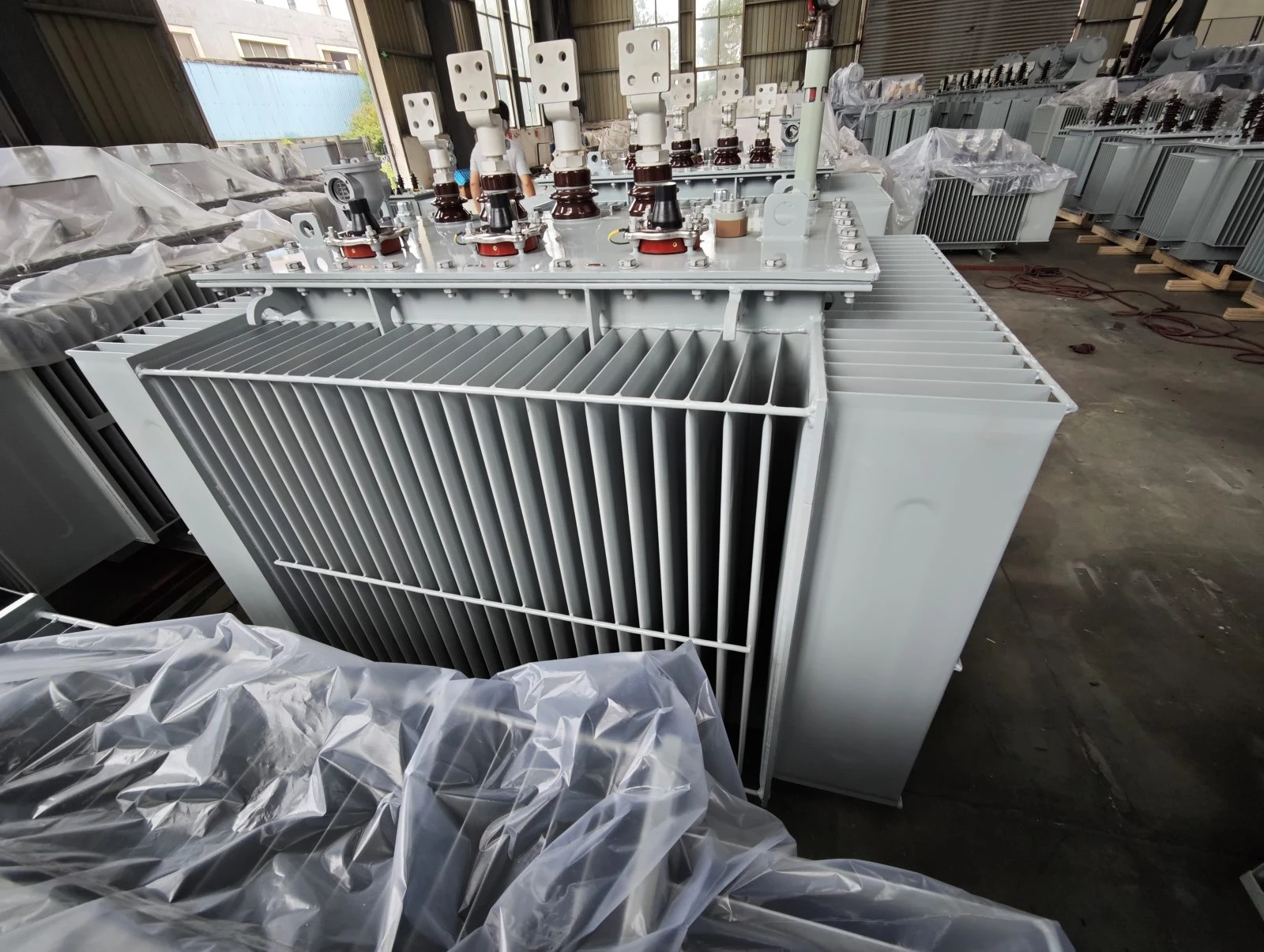
The external structure of the transformer bushing includes: terminal block, lead connector, rain cover, oil level gauge, oil plug, oil conservator, upper porcelain sleeve, end screen, lifting ring, oil sampling valve, nameplate, air release plug, connecting sleeve, lower porcelain sleeve and voltage equalizing ball. Among them, the oil conservator at the head of the bushing is used to adjust the oil volume change caused by temperature changes, avoiding excessive pressure inside the bushing; the voltage equalizing ball at the tail can improve the electric field distribution and reduce the insulation distance between the bushing tail and the grounding part. These structures are also optimized and designed according to the characteristics of isolation power transformer and 33kv to 11kv transformer.
3.2 Internal Structure
The internal structure of the bushing is mainly characterized by the following three points:
The main insulation is a multi-layer cylindrical capacitor core composed of oil-impregnated cable paper and aluminum foil grading electrodes, and the porcelain part serves as external insulation and a container for transformer oil. This insulation structure is widely used in high-voltage bushings of 33kv to 11kv transformer.
The bushing adopts a fully sealed structure, and the internal transformer oil is an independent system, not affected by the atmosphere, which effectively prevents moisture and impurities from entering and ensures insulation performance. This is particularly important for isolation power transformer that requires high insulation isolation.
The overall connection of the bushing is mechanically fastened with strong springs, which not only ensures sealing but also compensates for the length change of each component caused by temperature changes, improving the service life of the bushing.
4. Classification of Transformer Bushings
According to insulating materials and insulating structures, bushings can be divided into three categories, which are applied in different types of transformers such as 33kv to 11kv transformer and isolation power transformer:
Single insulation bushing: It is divided into pure porcelain and resin bushings. It has a simple structure and is suitable for low-voltage transformers or auxiliary components of isolation power transformer.
Composite insulation bushing: It includes oil-filled, glue-filled and gas-filled bushings. Among them, oil-filled bushings have good insulation and heat dissipation performance and are often used in 33kv to 11kv transformer.
Capacitive bushing: It is divided into oil-paper capacitive and glue-paper capacitive. Oil-paper capacitive bushings are widely used in medium and high-voltage transformers due to their excellent voltage distribution performance. According to the current-carrying structure, they can be divided into cable-through type and conduit current-carrying type. Cable-through type and direct conduit current-carrying type bushings are widely used in power systems, including 33kv to 11kv transformer and high-power isolation power transformer.
5. Common Problems and Maintenance of Transformer Bushings
5.1 Common Faults
Sealing failure: Poor top sealing of oil-paper capacitive bushings may lead to water ingress and insulation breakdown; poor lower sealing will cause oil leakage and oil level drop, which is a common fault in 33kv to 11kv transformer bushings.
Pollution flashover: Two necessary conditions for pollution flashover of bushing porcelain insulation are dirty dust on the surface and surface wetting. Pollution flashover may cause false tripping and damage the bushing surface. For isolation power transformer used in harsh environments, this fault needs to be focused on prevention.
5.2 Maintenance and Installation Points
Maintenance items: ① Check that the bushing porcelain parts are intact without cracks, smooth surface, no discharge flashover marks; ② Ensure the end screen is well grounded; ③ Check that the bushing oil level is moderate and there is no oil leakage; ④ Conduct dielectric loss and insulation tests regularly.
Installation precautions: First, check whether the bushing model is correct, and whether the electrical test and oil test are qualified. When hoisting the bushing, abide by the hoisting operation regulations to prevent damage to the porcelain sleeve; the inclination angle of the bushing when hoisting should be determined according to the angle of the transformer bushing riser. The lead wire should not be twisted or knotted, and the conical insulation at the root of the lead wire should extend into the bushing voltage equalizing ball. These points are equally applicable to the installation of 33kv to 11kv transformer and isolation power transformer bushings.

6. About JINSHANMEN TECHNOLOGY CO., LTD
Given the core role of transformer bushings in ensuring the safe operation of power transformers, JINSHANMEN TECHNOLOGY CO., LTD has always attached great importance to the matching and quality control of key components such as bushings in the R&D and production of transformers. As a professional manufacturer of power transmission and distribution equipment, we mainly produce oil immersed power transformers, dry-type power transformers, oil immersed three-dimensional coiled power transformers, dry-type three-dimensional coiled power transformers, mining explosion-proof dry-type transformers, mining explosion-proof mobile substations, amorphous alloy power transformers, on load capacity regulating power transformers, locomotive dry-type transformers, as well as prefabricated substations, modular substations, wind energy box type substations, high and low voltage switchgear and other transmission and distribution equipment. Especially in the production of 33kv to 11kv transformer and isolation power transformer, we have formed a complete industrial chain from the selection of matching bushings to the final assembly and testing. With strict quality control standards and rich technical experience, we provide customers with high-quality transformers and supporting services, effectively ensuring the safe and efficient operation of the power system.