

Ⅰ. Introduction
Power transformers serve as indispensable components in modern power transmission and distribution networks, servicing industrial manufacturing, urban power supply, renewable energy projects and other critical scenarios. Optimized protection settings, appropriate substation selection and routine preventive maintenance are essential to prolong equipment lifespan and sustain grid operational stability. Businesses seeking reliable distribution solutions can opt for an outdoor dry type transformer for exposed installation environments or a 2500 kva dry type transformer for medium-to-large capacity power regulation to mitigate unexpected failures and unplanned outages.
JINSHANMEN TECHNOLOGY CO., LTD is a seasoned manufacturer specializing in the research, development and production of comprehensive power distribution equipment. Our diverse product portfolio covers oil-immersed and dry-type power transformers, 3D wound core transformers, mining explosion-proof transformers and mobile substations, amorphous alloy transformers, on-load tap regulating transformers, locomotive dedicated transformers, as well as prefabricated stations, modular box substations and high-low voltage switchgears. We deliver tailor-made outdoor dry type transformer units and cost-effective 2500 kva dry type transformer packages to global clients, catering to customized power allocation requirements across various industries.
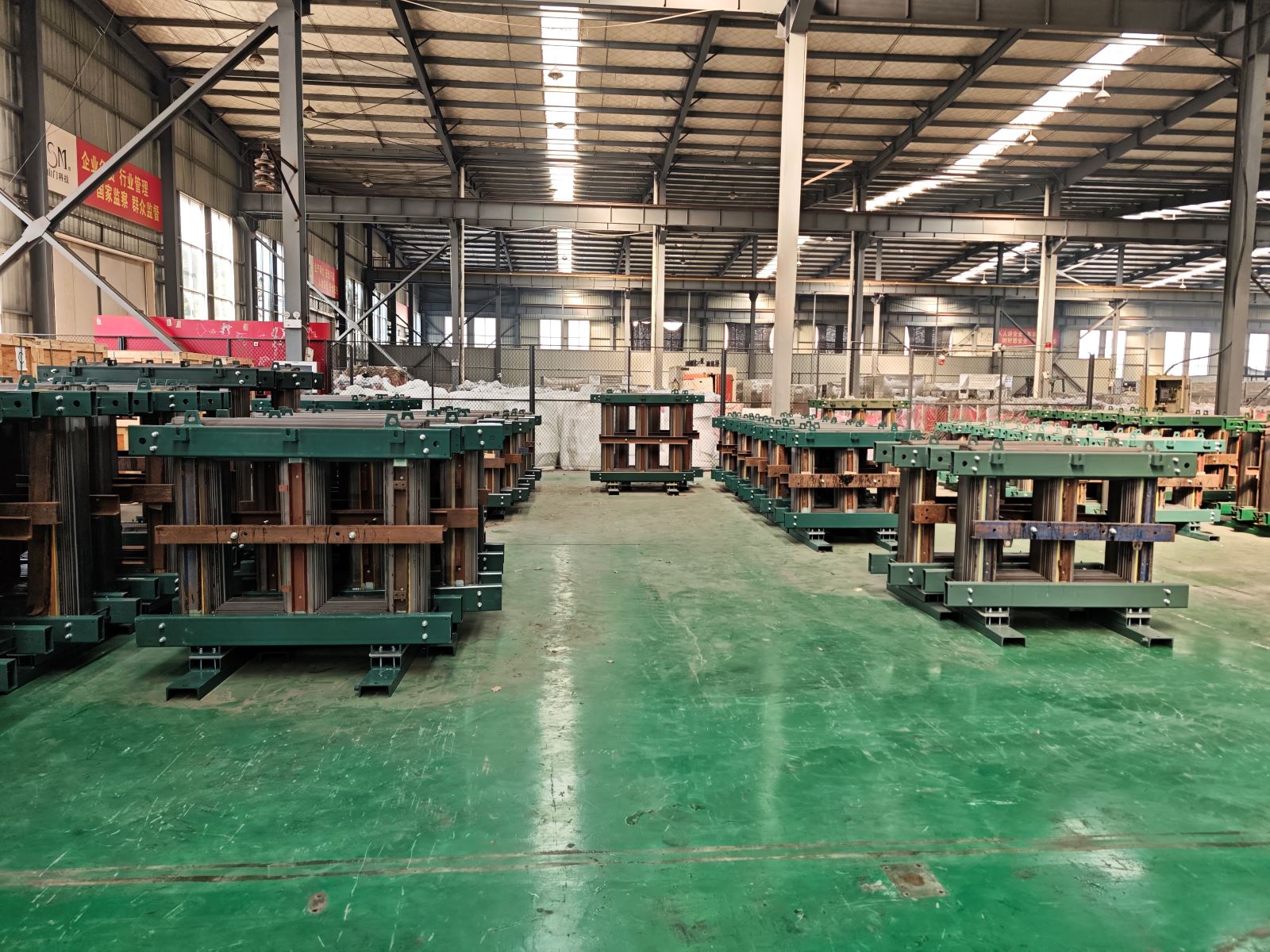
Ⅱ. Two Core Protection Technologies for Power Transformers
Transformer protection systems consist of main and backup protection mechanisms, working in tandem to address winding defects, outgoing line faults and grounding accidents. Zero-sequence current protection and differential protection are two mainstream protective solutions widely adopted for oil-immersed and dry-type transformers across all capacity grades.
1. Transformer Zero-sequence Current Protection
Designed exclusively for grounding short-circuit faults, zero-sequence current protection applies to large-current grounding systems. It acts as the backup protection for transformer main devices and adjacent power components against all types of grounding failures.
Working Principle: Three-phase balanced circuits generate no zero-sequence signals under normal operating status, keeping the protection system dormant. A single-phase or multi-phase grounding fault creates zero-sequence current within the circuit; once the current exceeds the relay threshold, the current relay triggers the mechanism. The time-delay relay will then trip breakers on both transformer sides to isolate the faulty circuit efficiently.
Setting Standard: The activation current of zero-sequence protection must surpass the threshold value of outgoing line backup protection. Meanwhile, its operating time should be set one time step higher to eliminate potential malfunctions and blind protection zones.
2. Transformer Current Differential Protection
Current differential protection functions as the primary main protection for double-winding and three-winding transformers, extensively deployed for industrial equipment and large-scale dry-type distribution transformers used in outdoor scenarios.
Protection Scope: This technology safeguards transformers from phase-to-phase short circuits on windings and outgoing lines, as well as internal single-phase inter-turn short faults, acting as the most reliable barrier against internal equipment damage.
Working Principle: Differential relays are installed in dedicated differential loops, which calculate current deviation between two sets of current transformers. The loop maintains zero current during regular operation and external faults in ideal conditions. In practical operation, minor unbalanced current caused by inconsistent transformer parameters needs precise calibration to prevent false triggering. When internal short circuits occur, reversed current polarity leads to current superposition and instant relay activation.
Core Advantage: Unlike zero-sequence protection, differential protection requires no time-delay coordination with external devices. It achieves instantaneous fault isolation to minimize losses caused by sudden failures.
3. Core Differences Between Two Protections
Zero-sequence current protection is fault-specific, only responding to grounding accidents via zero-sequence filters or dedicated current transformers. In contrast, differential protection identifies failures by comparing current magnitude and polarity on both equipment sides. It covers all internal short-circuit issues and serves as the primary protective measure for core power facilities including transformers and generators.
Ⅲ. Classification of Common Substations
Substations bridge power generation plants and end users, undertaking core tasks including power collection, voltage conversion and power distribution. Based on voltage level, strategic importance and application scenarios, substations fall into five categories, all compatible with our customized dry-type transformer products:
Hub Substation: Serving as pivotal nodes of regional power grids, these substations operate at 330kV or higher voltage levels. They connect multiple power sources with numerous outgoing circuits and boast large transformation capacity. Any outage will trigger widespread blackouts or even regional grid collapse.
Intermediate Substation: Located at intersections of main grid loops and trunk lines with a voltage range from 220kV to 330kV, these stations integrate 2 to 3 power sources. They prioritize through-power transmission while supplying stepped-down power to regional end users, and outages may result in grid splitting.
Regional Substation: The primary power supply infrastructure for small and medium-sized cities, operating at 110kV to 220kV. Unexpected shutdowns will directly disrupt daily power supply for the entire service area.
Enterprise Substation: Customized private substations for large and medium industrial enterprises, with a voltage rating between 35kV and 220kV. Equipped with merely 1 or 2 incoming lines, it meets independent power consumption demands for industrial production.
Terminal Substation: Deployed at the terminal of distribution lines near user load centers. These stations receive 10kV-110kV high-voltage power and lower the voltage to provide electricity for residential communities and small-scale industrial facilities.

Ⅳ. Preventive Test Items for Electrical Equipment
Periodic preventive testing is indispensable for transformer and substation maintenance. It effectively detects insulation dampness, aging and latent local defects, lowering overall failure rates and extending the service life of distribution devices. Below are five universally adopted testing methods for all transformer types:
1. Insulation Resistance Measurement
As the simplest and most prevalent testing method, this test utilizes a megohmmeter to measure 1-minute insulation resistance. The collected data helps inspectors detect concentrated penetrating defects and overall moisture accumulation inside insulation materials.
2. Leakage Current Measurement
This method shares identical working principles with insulation resistance testing and detects similar equipment defects. Powered by high-voltage rectifying devices and measured via microammeters, it features adjustable voltage, high sensitivity and stable repeatability. Insulation conditions can be further evaluated by calculating the absorption ratio of tested samples.
3. Dielectric Loss Angle Measurement
This high-sensitivity testing method accurately diagnoses insulation dampness, aging and deterioration, alongside localized defects for small-volume electrical devices. Its main limitation is poor performance in detecting tiny defects inside large-scale equipment, yet it remains a standard procedure for equipment delivery, handover and daily maintenance.
4. AC Withstand Voltage Test
Classified as a destructive test, AC withstand voltage testing is the most authoritative approach to assess insulation strength. It locates the weakest insulation points under rated operating conditions, providing decisive reference for judging whether equipment is eligible for formal operation.
5. DC Withstand Voltage Test
Apart from identifying damp and aged insulation, this test uniquely detects partial defects that cannot be captured by AC testing. The two withstand voltage tests are irreplaceable for one another, and dual testing is mandatory for high-value equipment such as motors and power cables during routine maintenance.
Ⅴ. Conclusion
Scientific protection configuration, rational substation layout and standardized preventive testing form the triple guarantee for stable transformer operation. Complementary zero-sequence and differential protection eliminates potential circuit faults; categorized substation selection realizes precise power supply matching; regular insulation testing prevents hidden equipment risks. As a reliable global supplier, JINSHANMEN TECHNOLOGY CO., LTD offers full-series power distribution equipment including oil-immersed transformers, anti-explosion transformers, outdoor dry type transformer and standard 2500 kva dry type transformer, alongside one-stop customized solutions and professional after-sales technical support for worldwide partners.