

Abstract: Partial discharge is a common and critical insulation fault of dry type power transformer, which directly affects the service life and operational safety of power transformation equipment. Especially for widely used 100 kva dry type transformer, long-term unregulated partial discharge will lead to accelerated insulation aging and even equipment breakdown. This article systematically analyzes the main causes and potential hazards of partial discharge of dry type power transformer, and puts forward targeted and practical control measures from design, production process, raw material selection and operation management, providing professional technical reference for the production, operation and maintenance of 100 kva dry type transformer and other specifications of dry-type transformers.
JINSHANMEN TECHNOLOGY CO., LTD is a professional manufacturer of power transmission and distribution equipment. The company mainly produces oil immersed power transformers, dry-type power transformers, oil immersed three-dimensional coiled power transformers, dry-type three-dimensional coiled power transformers, mining explosion-proof dry-type transformers, mining explosion-proof mobile substations, amorphous alloy power transformers, on load capacity regulating power transformers, locomotive dry-type transformers, as well as prefabricated substations, modular substations, wind energy box type substations, high and low voltage switchgear and other transmission and distribution equipment. Relying on rich production experience and mature technical system, the company has perfect quality control standards for partial discharge suppression of all series of dry-type transformers.
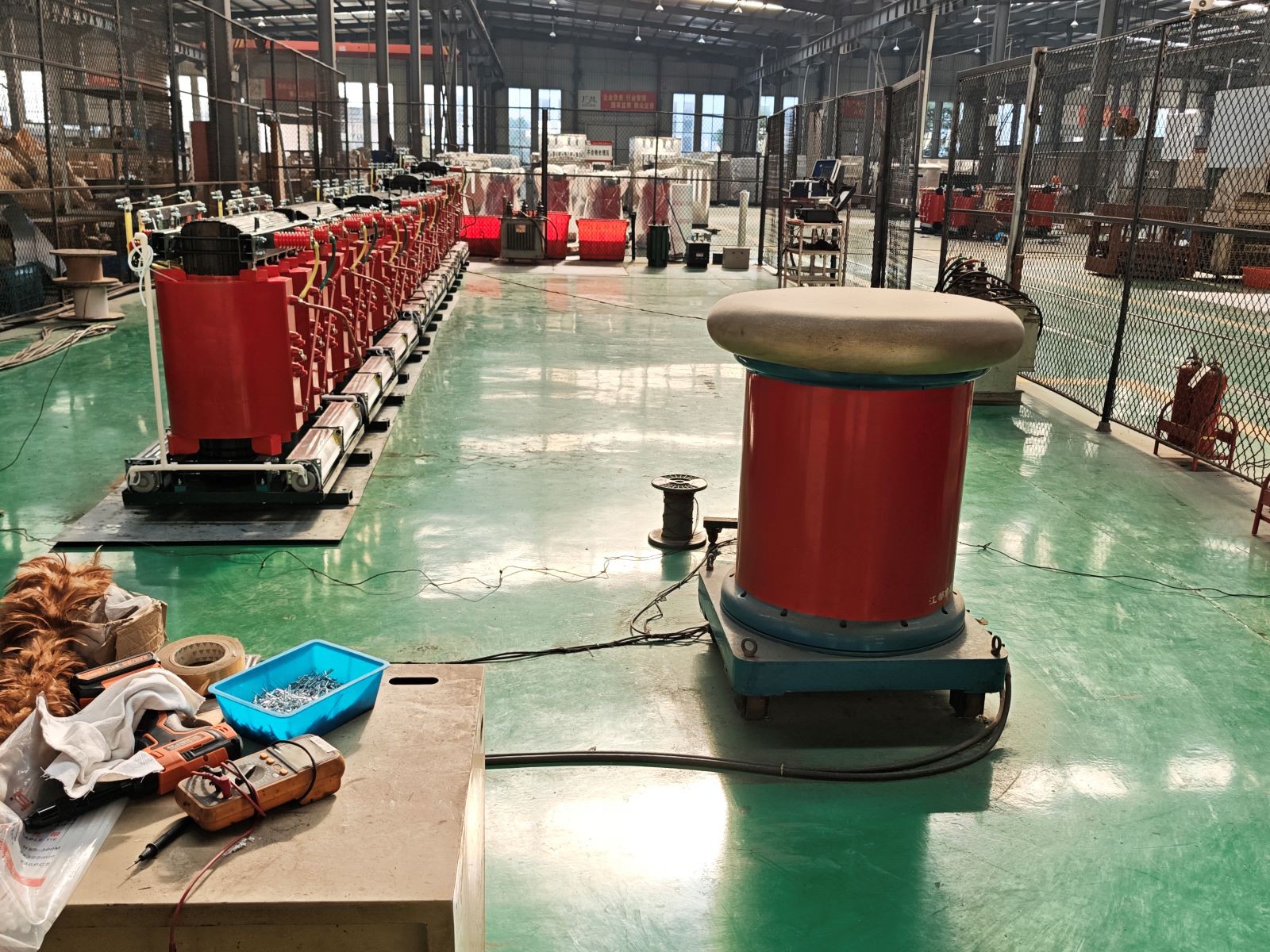
Ⅰ. Main Causes of Partial Discharge of Dry Type Power Transformer
Partial discharge of dry type power transformer is a local insulation breakdown phenomenon under high electric field. It is not caused by a single factor, but jointly induced by structural design defects, production process errors, raw material quality problems and operating environment changes. Even standard 100 kva dry type transformer will have partial discharge risks if the production and quality control are not in place. The specific causes are summarized as follows:
1. Tip Electric Field Concentration
Metal conductors and insulating parts inside the transformer often have tiny sharp corners and burrs. Under high-strength electric field, charges will gather intensively at these tip positions, resulting in local electric field distortion and excessive field strength, which exceeds the withstand voltage of local insulation, thus triggering partial discharge. This is the most common cause of partial discharge for all types of dry type power transformer.
2. Internal Bubble Defects in Insulation
Epoxy resin cast insulation is the core insulating structure of dry-type transformers. In the vacuum casting process, improper process control will lead to tiny air bubbles and gaps inside the insulation layer. Since the dielectric coefficient of air bubbles is far lower than that of epoxy resin insulation, the electric field strength borne by bubbles is much higher than that of adjacent insulating materials, which is easy to break down and induce continuous partial discharge. This defect is the key factor leading to excessive partial discharge of 100 kva dry type transformer and medium and small-capacity dry-type transformers.
3. Poor Electrical Connection
Poor electrical contact between internal conductors and suspended potential of metal parts will cause uneven voltage distribution. The local potential difference will continuously break down the air gap, resulting in frequent partial discharge. This problem is prominent in the assembly link of dry-type transformers and is easy to be ignored in routine inspection.
4. Insulation Moisture and Environmental Impact
Long-term placement of idle transformers, excessive water content in insulating materials, and humid operating environment will reduce the overall insulation strength of the equipment. In addition, insulation damage caused by improper installation will further deteriorate the insulation performance, resulting in decreased partial discharge resistance and increased partial discharge volume.
5. Unreasonable Design and Process Defects
Unreasonable insulation structure design such as excessive field strength between layers and turns of windings, unqualified raw insulating materials, non-standard winding, drying and casting processes, and unqualified assembly precision (unpolished lead burrs and insufficient insulation distance) will all lead to increased partial discharge of transformers.
Ⅱ. Hazards of Partial Discharge of Dry Type Power Transformer
Partial discharge is the invisible killer of dry-type transformer insulation. Although the single discharge energy is low, it has cumulative and irreversible damage to the insulation system. Long-term unprocessed partial discharge will seriously threaten the stable operation of power equipment.
1. Accelerate Insulation Aging
Partial discharge will produce electrolysis, thermal effect and chemical corrosion, which will continuously oxidize and erode epoxy resin and other insulating materials, damage the internal molecular structure of insulation, and lead to gradual aging, pulverization and performance degradation of insulating layers. Transformers with excessive partial discharge for a long time will experience internal insulation breakdown and burnout within 3-5 years in severe cases.
2. Trigger Permanent Insulation Breakdown
Surface partial discharge will leave permanent discharge traces on the insulation surface and reduce the insulation performance. The corrosive discharge formed at internal cavities and electrode tips will penetrate into the deep insulation layer, expand the discharge channel continuously, and eventually cause overall insulation breakdown, resulting in transformer shutdown and failure.
3. Affect Power System Stability
Frequent partial discharge will cause voltage fluctuation and power loss, reduce the operational efficiency of transformers, and even induce short-circuit faults in severe cases, bringing hidden dangers to the safe and stable operation of the entire power distribution system.
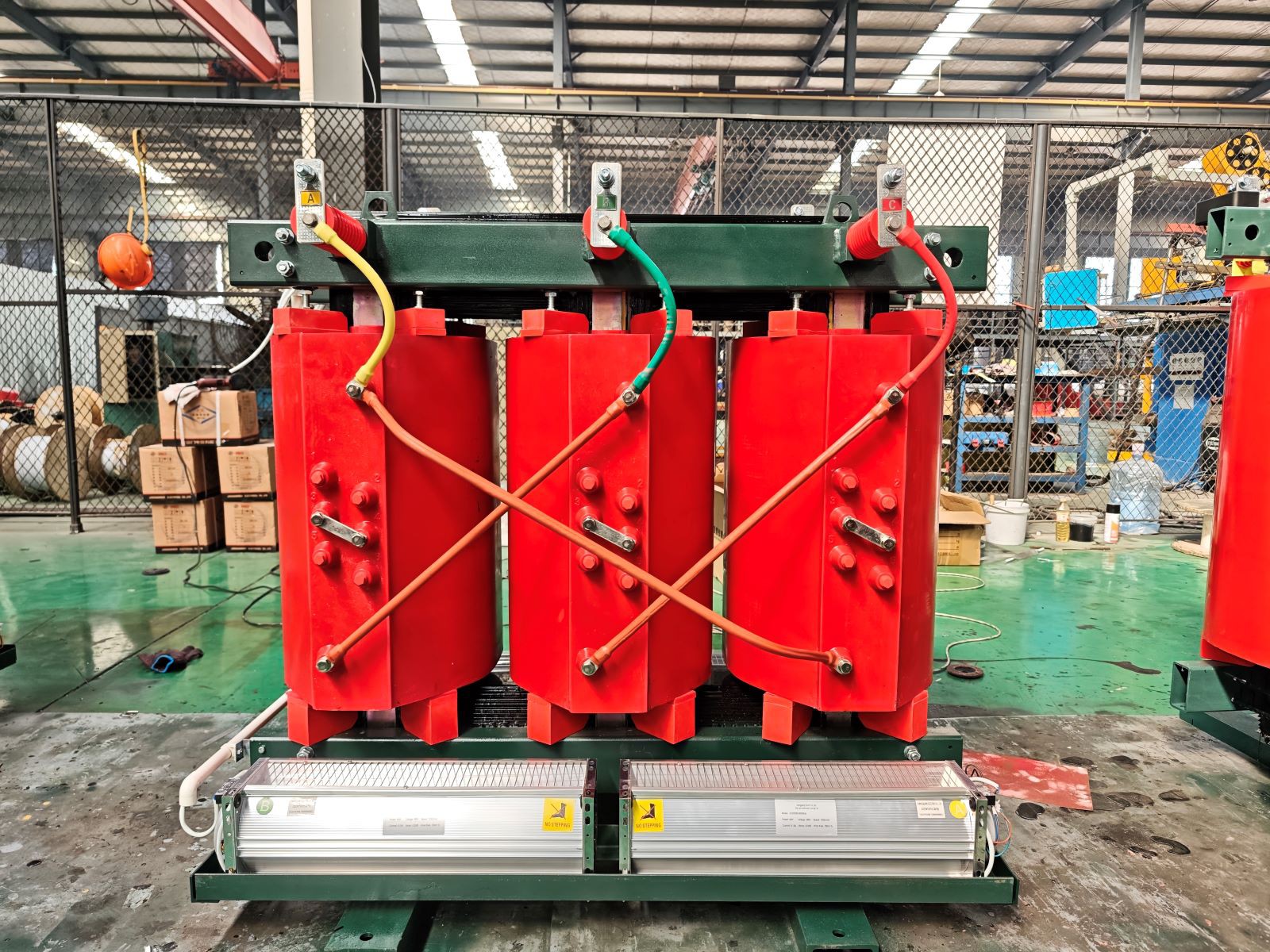
Ⅲ. Effective Control Measures for Partial Discharge
Combined with years of R&D and production experience, JINSHANMEN TECHNOLOGY CO., LTD optimizes the whole process from structural design, production technology, raw material selection and standardized assembly, and forms a complete set of mature partial discharge control schemes for dry-type transformers, which effectively suppresses the partial discharge problem of dry type power transformer and 100 kva dry type transformer.
1. Optimize Winding Insulation Structure Design
First, ensure sufficient main insulation distance. In the design, reasonably enlarge the insulation distance between high and low voltage coils, between high voltage coil phases and between high voltage coil and ground, reduce internal electric field strength, and properly increase the inner wall insulation of high voltage coils to weaken external field strength. Second, optimize the layer and section structure of high voltage coils. Increase the number of coil sections reasonably. For 35kV dry-type transformers, the number of sections can be controlled above 16-18 sections to reduce layer voltage and avoid excessive local field strength. Third, adopt reliable shielding design. The high and low voltage shielding layers are used to wrap internal tips and air gaps, eliminate tip discharge and gap discharge, ensure reliable grounding and connection of shielding layers, and keep the shielding surface flat and intact without sharp defects.
2. Standardize Winding and Vacuum Casting Process
The coil winding and epoxy resin vacuum casting process is the core link to control partial discharge. During winding, strictly follow the design drawings and process specifications, prohibit random adjustment of turns and insulation layers, and keep the winding materials clean and dust-free. During assembly and welding, polish all burrs on lead terminals to avoid tip effect, prevent high temperature welding from damaging coil insulation, and ensure sufficient insulation gap for resin filling. In the epoxy resin batching and degassing link, strictly control the proportioning ratio, temperature, vacuum degree and degassing time, monitor the viscosity change in real time, control the coil mold temperature within the standard range, and control the casting speed stably to avoid air bubble generation caused by excessive speed. At the same time, strictly implement the drying process to eliminate internal moisture of the coil.
3. Strictly Control Raw Material Quality
For electromagnetic wires, select qualified insulated flat copper wires and round copper wires, and require suppliers to polish and detect wires to eliminate burr defects from the source. For epoxy resin materials, prefer high-quality products with low viscosity, high insulation strength and good toughness, and formulate targeted process specifications according to different resin models. For interlayer insulating materials, cooperate with stable and qualified suppliers for a long time to ensure the long-term stability of insulation performance and avoid hidden insulation defects caused by material replacement.
4. Strengthen Operation and Environment Management
Avoid long-term idle placement of transformers, conduct regular insulation detection and moisture-proof treatment for idle equipment. Keep the operation environment dry and clean, reduce dust and humid air accumulation, and avoid insulation damp and performance degradation caused by poor environmental conditions. Strictly check the insulation integrity and electrical connection firmness during installation to eliminate potential discharge hazards in advance.
Ⅳ. Conclusion
Partial discharge of dry type power transformer is caused by the superposition of design, technology, materials and environment. Through structural optimization, standardized process production, strict raw material inspection and scientific operation and maintenance, the partial discharge volume of transformers can be effectively controlled within the national standard range. JINSHANMEN TECHNOLOGY CO., LTD always adheres to strict quality control standards, optimizes the production and manufacturing process of 100 kva dry type transformer and all series of dry-type transformers, effectively solves various partial discharge problems, and provides high-quality, safe and reliable power transmission and distribution equipment for global customers.