

I. Overview
The gas relay, also known as a Buchholz relay, is a core non-electrical protection device exclusively used for oil-immersed power transformers. It monitors internal transformer faults by detecting characteristic gases decomposed from insulating oil and turbulent oil flow, realizing real-time monitoring and fault protection for the internal insulation status and operating conditions of transformers. As one of the main internal protection devices for oil-filled transformers, the gas relay forms a complete and reliable protection system together with differential protection and overcurrent protection. Standard specifications stipulate that all 800 kva and above oil-immersed transformers, as well as 400 kva and above indoor oil-immersed transformers, must be equipped with gas protection. The hermetically sealed oil filled transformer widely used in industrial power distribution relies heavily on Buchholz relay protection to maintain long-term stable operation.
II. Professional Manufacturer Introduction
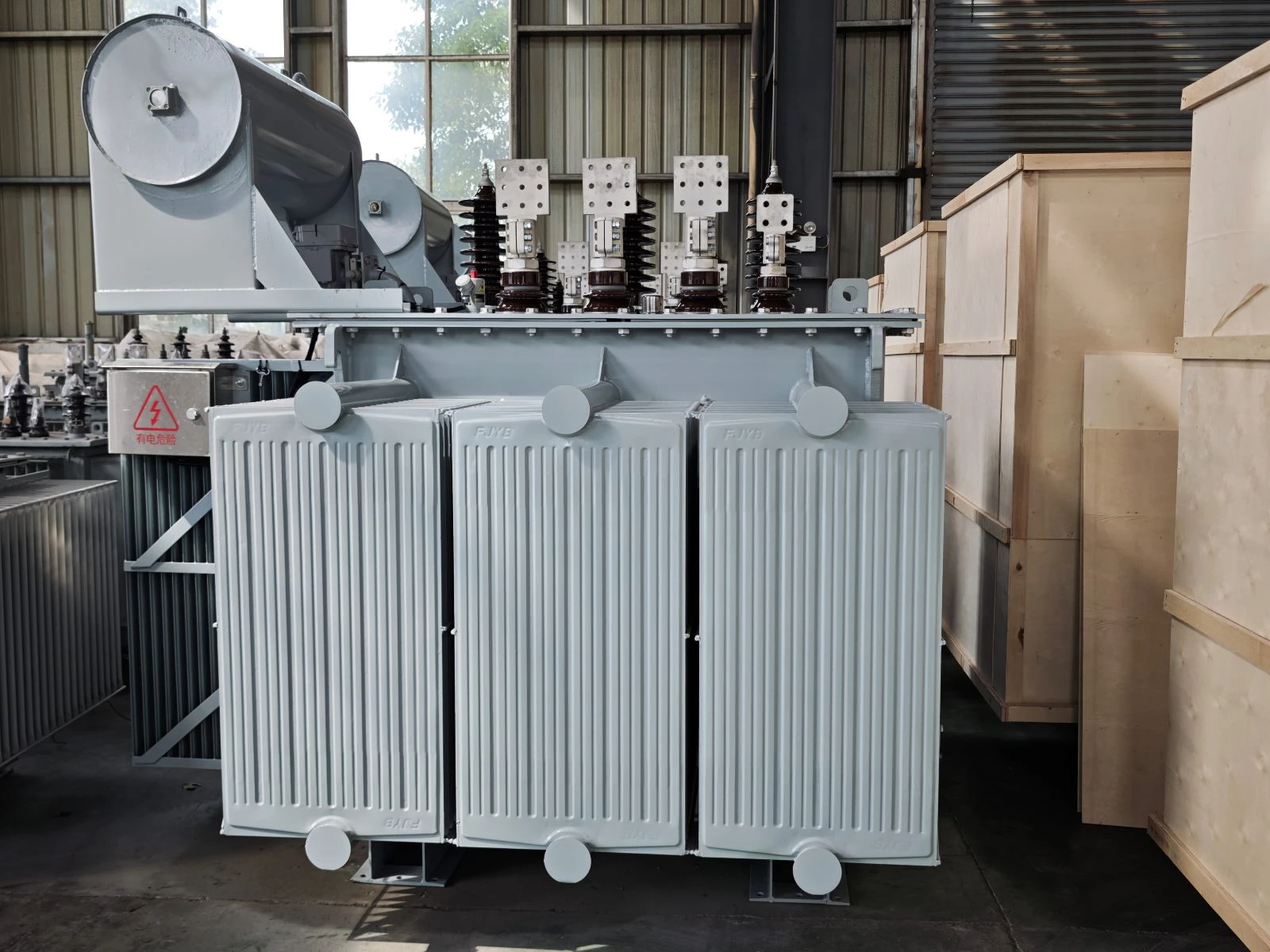
JINSHANMEN TECHNOLOGY CO., LTD is a professional manufacturer focusing on R&D, production and sales of power transmission and distribution equipment. The company mainly produces oil immersed power transformers, dry-type power transformers, oil immersed three-dimensional coiled power transformers, dry-type three-dimensional coiled power transformers, mining explosion-proof dry-type transformers, mining explosion-proof mobile substations, amorphous alloy power transformers, on load capacity regulating power transformers, locomotive dry-type transformers, as well as prefabricated substations, modular substations, wind energy box type substations, high and low voltage switchgear and other transmission and distribution equipment. Our independently developed 1000 kva power transformer is equipped with a fully optimized gas protection system, delivering outstanding safety and stability for commercial and industrial power supply scenarios.
III. Installation Requirements of Gas Relay
The gas relay is installed on the connecting pipeline between the main oil tank and the conservator of the oil-immersed transformer. This standardized installation solution is specially adapted for the hermetically sealed oil filled transformer with integrated sealing structure to prevent false protection actions. The axis of the connecting pipeline shall have an inclination of 2%-4% relative to the horizontal plane, rising gradually from the transformer oil tank to the conservator. This structural design ensures that fault gas can smoothly gather to the gas relay, effectively avoiding misoperation caused by normal oil flow fluctuation. In addition, the observation window of the relay shall face the direction convenient for daily inspection and maintenance, to facilitate staff to check the internal gas and oil status in real time. Strict installation specifications are essential for the reliable operation of the 1000 kva power transformer and other medium-capacity oil-filled distribution transformers.
IV. Protection Scope of Gas Protection
Different from electrical protection devices such as differential protection and overcurrent protection, gas protection is a typical non-electrical protection for transformers, which does not rely on current transformers, voltage transformers and other electrical measuring components. It is not affected by system operation mode, short-circuit current level, system oscillation and other electrical factors, and can cover almost all internal faults of the transformer oil tank. Its protection scope includes inter-phase short circuit, winding turn-to-turn short circuit, winding-to-core or shell short circuit, core failure, oil level drop and oil leakage, poor contact of on-load tap-changer, poor wire welding and other faults. Especially for minor turn-to-turn short circuit faults that may fail to trigger differential protection, gas protection is the most reliable secondary guarantee, which perfectly complements the safety design of the hermetically sealed oil filled transformer.
V. Light Gas Protection: Early Fault Types & Mechanism
Light gas protection is mainly used to monitor minor and early latent faults inside the transformer, which will trigger an alarm signal without tripping the equipment, reminding operation and maintenance personnel to check and handle hidden dangers in time. Its corresponding fault types are mainly divided into four categories:
1. Partial Discharge Fault
It is the most common early fault of transformer insulation systems. The fault gas is dominated by H₂ (accounting for 70%-90% of the total fault gas), with a small amount of methane precipitated, and the gas production rate is 1-100mL/h. Long-term unhandled partial discharge will cause gradual insulation deterioration and eventually lead to insulation breakdown and equipment failure.
2. Local Core Overheating
Caused by multiple grounding of the iron core forming circulating current, insulation damage between silicon steel sheets, and loose fasteners leading to abnormal magnetic flux. The local temperature of the fault area can reach 100-300℃. The characteristic gases are CH₄ and C₂H₄, accompanied by CO and CO₂ precipitation, with a gas production rate of 10-500mL/h. Gas chromatographic analysis is required immediately after the light gas protection acts.
3. Bubble Precipitation in Oil
It is mostly non-fault gas accumulation, caused by sudden load increase, oil pump start-stop, sudden oil flow change, new oil filling or air mixing after equipment maintenance. It is necessary to confirm gas components through analysis, strengthen equipment monitoring, and perform oil degassing treatment when necessary.
4. Slow Deterioration of Insulating Materials
Long-term aging of solid insulation, including thermal aging, oxidative aging and moisture aging. The characteristic gases are continuous rising of CO and CO₂, and the CO₂/CO ratio can reflect the overheating degree of the equipment. The total hydrocarbon increases slowly with a stable component ratio, which belongs to long-term latent aging faults.
VI. Heavy Gas Protection: Severe Fault Types & Mechanism
Heavy gas protection targets severe sudden faults inside the transformer. It will instantly trigger a trip action to cut off the power supply, avoid fault expansion, and protect the transformer body from permanent damage. The main applicable severe faults are as follows:
1. Winding Turn-to-Turn Short Circuit
The most common severe internal fault of transformers. The fault current can reach 10-50 times of the rated current, causing sharp local temperature rise. A large amount of H₂ and C₂H₂ are generated rapidly, and the insulating oil vaporizes violently to form high-speed oil flow. It forms a dual main protection with differential protection to quickly isolate faults.
2. Winding Ground Short Circuit
A destructive internal fault. The continuous electric arc at the fault point releases huge energy, causing instantaneous vaporization of insulating oil, sharp increase of oil tank pressure, and strong impact oil flow spreading to the oil conservator, which can be quickly captured by the heavy gas relay to trigger tripping.
3. Severe Iron Core Multi-point Grounding Fault
When the iron core has two-point or multi-point grounding, the internal circulating current surges and overheating intensifies. In severe cases, the grounding current reaches tens of amperes, causing local melting of the iron core and rapid vaporization of insulating oil. The heavy gas protection acts urgently, and the equipment must be shut down immediately for maintenance.
4. On-load Tap-changer Fault
Mostly occurs during voltage regulation operation of on-load tap-changers, including poor contact of contacts, deterioration of insulating oil, mechanical jamming and other faults. The oil flow impact caused by the fault is directional and sudden, which can quickly trigger heavy gas tripping protection.
5. Local Overheating Caused by Oil Channel Blockage
Oil sludge deposition, aging insulation falling off and metal residual impurities will block the transformer oil channel, reduce heat dissipation efficiency, and cause severe local overheating. The sharp temperature rise leads to intense oil flow surging, driving the heavy gas protection to act and cut off the fault loop.
VII. Gas Relay Structure & Operating Mechanism
The interior of the gas relay is fully filled with insulating oil during normal operation. The upper and lower floats float at the top limit position by buoyancy. When minor faults occur inside the transformer, a small amount of fault gas accumulates at the arch top of the relay, causing the internal oil level to drop slowly. The upper float falls with the oil level, and the magnetic reed switch closes after reaching the set threshold, connecting the alarm loop and realizing light gas alarm.
When severe internal faults occur, a large amount of gas is generated in a short time, causing sudden changes in air pressure and oil pressure inside the oil tank. The strong turbulent oil flow impacts the baffle of the gas relay, driving the magnet to move toward the reed switch. The contact closes instantly to connect the trip loop, complete heavy gas tripping protection, and avoid fault expansion.
VIII. Post-protection Operation & Fault Analysis
After the action of light gas or heavy gas protection, operation and maintenance personnel shall collect the gas in the gas collecting box in a timely manner for gas chromatographic analysis. The nature and severity of the internal fault are judged according to the composition and content of fault gas. Meanwhile, combined with electrical test data such as winding DC resistance, transformation ratio, dielectric loss and winding deformation test results, comprehensive analysis is carried out to accurately locate the fault and formulate maintenance schemes, ensuring the safe re-operation of the 1000 kva power transformer.
IX. Conclusion
As the most critical non-electrical main protection of oil-immersed transformers, gas protection makes up for the protection blind area of electrical protection devices and is the core guarantee for the safe operation of various oil-filled power transformers. JINSHANMEN TECHNOLOGY CO., LTD adheres to strict production and testing standards, optimizes the gas protection matching scheme for high-performance power equipment, and the reliable gas protection configuration of our 1000 kva power transformer and hermetically sealed oil filled transformer provides high-reliability power transmission and distribution equipment for global users, and supports the stable operation of industrial power grids and distribution systems.