

Overview
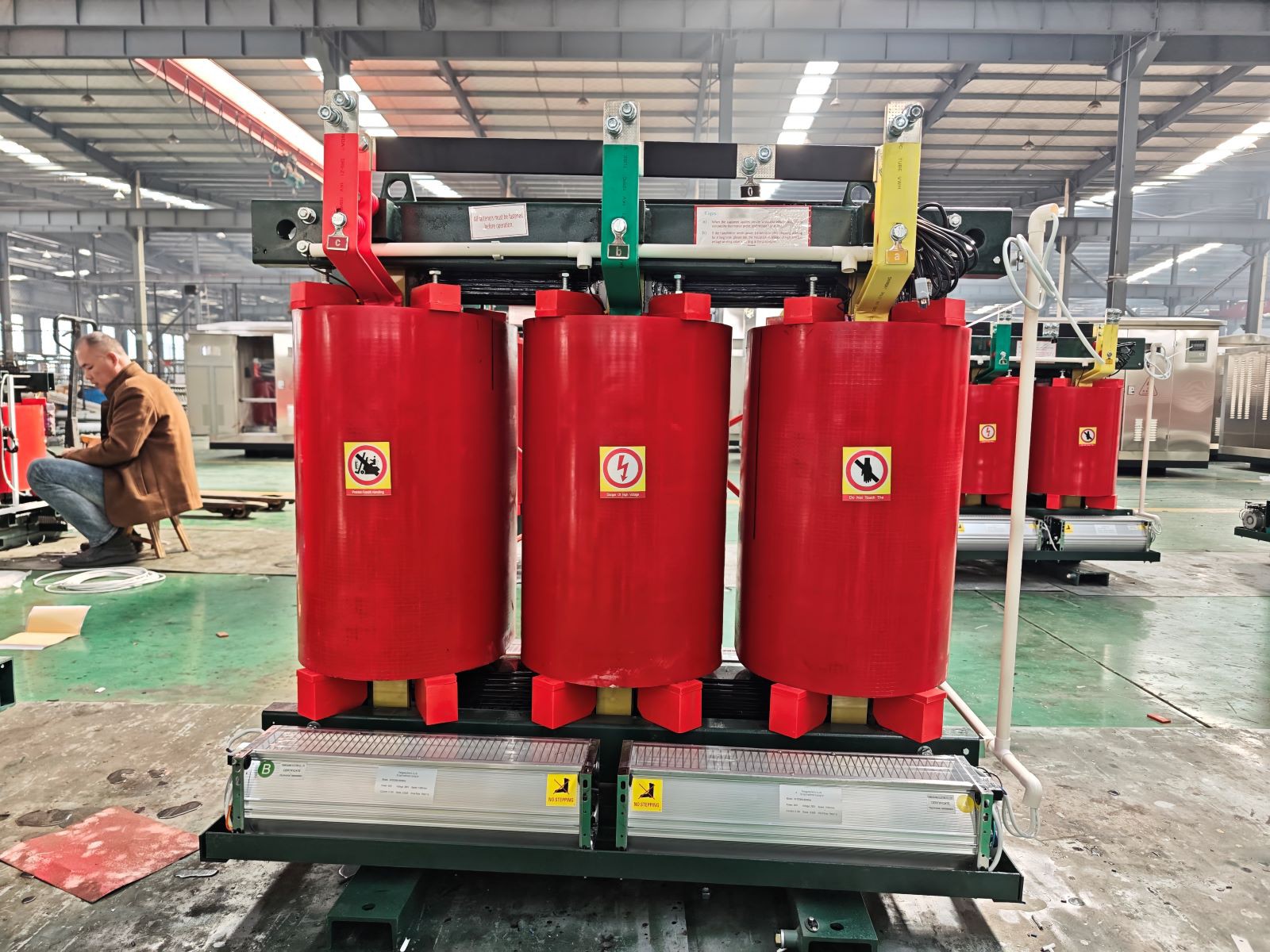
Windings of dry-type transformers generate heat during operation. Temperature rise (defined as the difference between the transformer's temperature and the ambient temperature, measured in Kelvin) directly determines insulation life and operational safety. In accordance with the national standard GB/T 1094.11, setting reasonable temperature thresholds and strictly controlling temperature rise are critical to ensuring the long-term, reliable operation of equipment such as 1000 kva dry type transformers and dry type step down transformers. JINSHANMEN TECHNOLOGY CO., LTD specializes in the R&D and manufacturing of oil-immersed power transformers, dry-type power transformers, mining explosion-proof transformers, and amorphous alloy power transmission and distribution equipment, delivering efficient, energy-saving dry-type transformer solutions to global customers.
I. Temperature Rise Limits (by Insulation Class)
Temperature rise limits are determined by the insulation's heat resistance class (under standard ambient conditions of ≤ 40℃):
|
Insulation Class |
Maximum Allowable Temperature |
Winding Temperature Rise Limit |
Actual Maximum Temperature (at 40℃ Ambient) |
|---|---|---|---|
|
Class F (Mainstream) |
155℃ |
≤100K |
≤140℃ |
|
Class H (High-Temperature Scenarios) |
180℃ |
≤125K |
≤165℃ |
- Class F Insulation: The most widely used option, accounting for over 90% of the market, suitable for most indoor applications; 1000 kva dry type transformers typically use Class F insulation.
- Class H Insulation: Designed for harsh environments such as high-temperature workshops and poorly ventilated underground power distribution rooms; dry type step down transformers can be equipped with Class H insulation for high-temperature operating conditions.
- Core Temperature Rise: ≤ 60K for Class F insulation and ≤ 80K for Class H insulation.
II. Standard Temperature Controller Settings
When configuring temperature controllers for 1000 kva dry type transformers and dry type step down transformers, the recommended temperature thresholds are as follows:
- Class F (Maximum Allowable Temperature: 155℃)
Early Warning: 120℃ (corresponding to a temperature rise of 80K)
Fan Activation: 130℃ (alarm triggered)
Trip Protection: 150℃
- Class H (Maximum Allowable Temperature: 180℃)
Early Warning: 140℃ (corresponding to a temperature rise of 100K)
Fan Activation: 150℃ (alarm triggered)
Trip Protection: 170℃
III. Three Risks of Excessive Temperature Rise
1. Sharp Reduction in Insulation Life (Six-Degree Rule): For every 6℃ increase in operating temperature, the insulation life is halved. Long-term overheating can reduce a typical 20-year service life to less than 10 years.
2. Reduced Load-Carrying Capacity: When ambient temperature exceeds 40℃, the transformer must operate at a derated capacity to prevent tripping. Special attention should be paid to the load factor of dry type step down transformers.
3. Increased Energy Consumption: Winding resistance increases by approximately 4% for every 10℃ rise in temperature, leading to higher copper losses and increased long-term electricity costs.
IV. Common Causes of Over-Temperature
Overloading: When the load factor exceeds 100%, the transformer's temperature rises by 6–8℃ for every 10% increase in load. The load factor of 1000 kva dry type transformers must be strictly monitored and controlled.
Poor Heat Dissipation: Common issues include fan malfunctions, dust blockages, inadequate ventilation, or ambient temperatures exceeding 40℃.
Three-Phase Imbalance: A current difference exceeding 10% between phases can cause local overheating.
Loose Wiring: Oxidized or loose terminals increase contact resistance, causing local overheating that transfers to the windings.
V. Temperature Monitoring & Maintenance Best Practices
1. Hierarchical Early Warning (Intelligent Temperature Controller)
Level 1 (80% of Temperature Rise Limit): Monitor load fluctuations
Level 2 (90% of Temperature Rise Limit): Activate forced air cooling
Level 3 (Temperature Rise Limit Reached): Trigger trip protection to prevent equipment damage
2. Daily Inspection
Daily: Verify three-phase current balance (deviation should be < 10%)
Weekly: Blow dust off windings using clean compressed air (water washing is strictly prohibited)
Monthly: Inspect fan operation and verify temperature controller accuracy
3. Regular Testing
Every Six Months: Measure insulation resistance using a 2500V megohmmeter (a reading of ≥ 1000MΩ at 20℃ is considered qualified)
Annually: Perform preventive maintenance tests and temperature rise tests (conducted under rated load for 4–8 hours)
VI. Conclusion
Temperature Setting Core: Class F transformers – alarm at 130℃ / trip at 150℃; Class H transformers – alarm at 150℃ / trip at 170℃.
Both 1000 kva dry type transformers and dry type step down transformers must comply with GB/T 1094.11, with temperature rise strictly controlled within the specified limits.
Daily operation and maintenance should focus on hierarchical temperature control early warning, regular dust cleaning, and three-phase balance monitoring – these practices significantly extend equipment life and reduce energy consumption.
About Us
JINSHANMEN TECHNOLOGY CO., LTD mainly produces oil-immersed power transformers, dry-type power transformers, oil-immersed three-dimensional coiled power transformers, dry-type three-dimensional coiled power transformers, mining explosion-proof dry-type transformers, mining explosion-proof mobile substations, amorphous alloy power transformers, on-load capacity regulating power transformers, locomotive dry-type transformers, as well as prefabricated substations, modular substations, wind energy box-type substations, and high and low voltage switchgear, among other power transmission and distribution equipment. Our products comply with both national and international standards and can be customized to meet specific customer requirements.